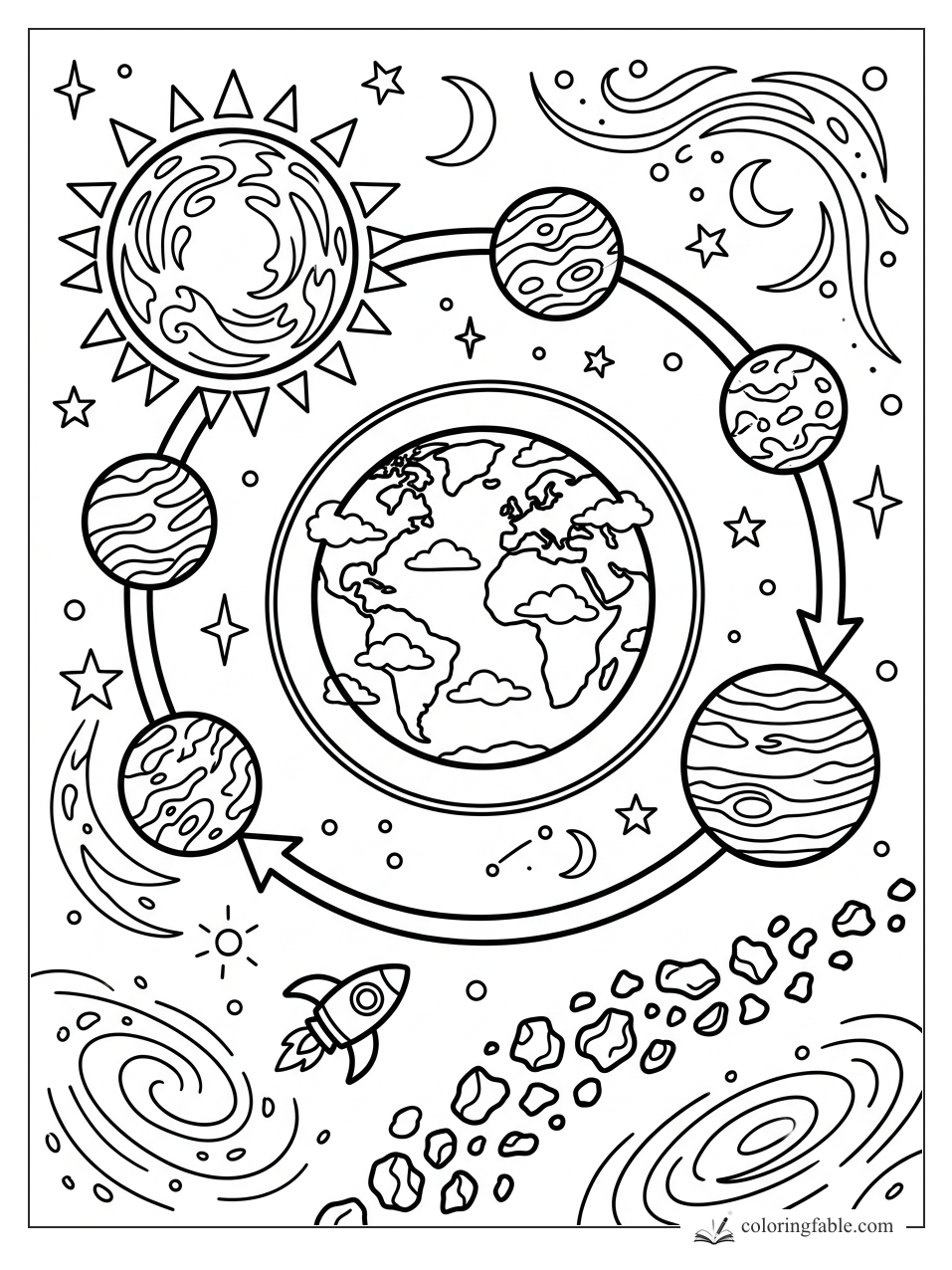
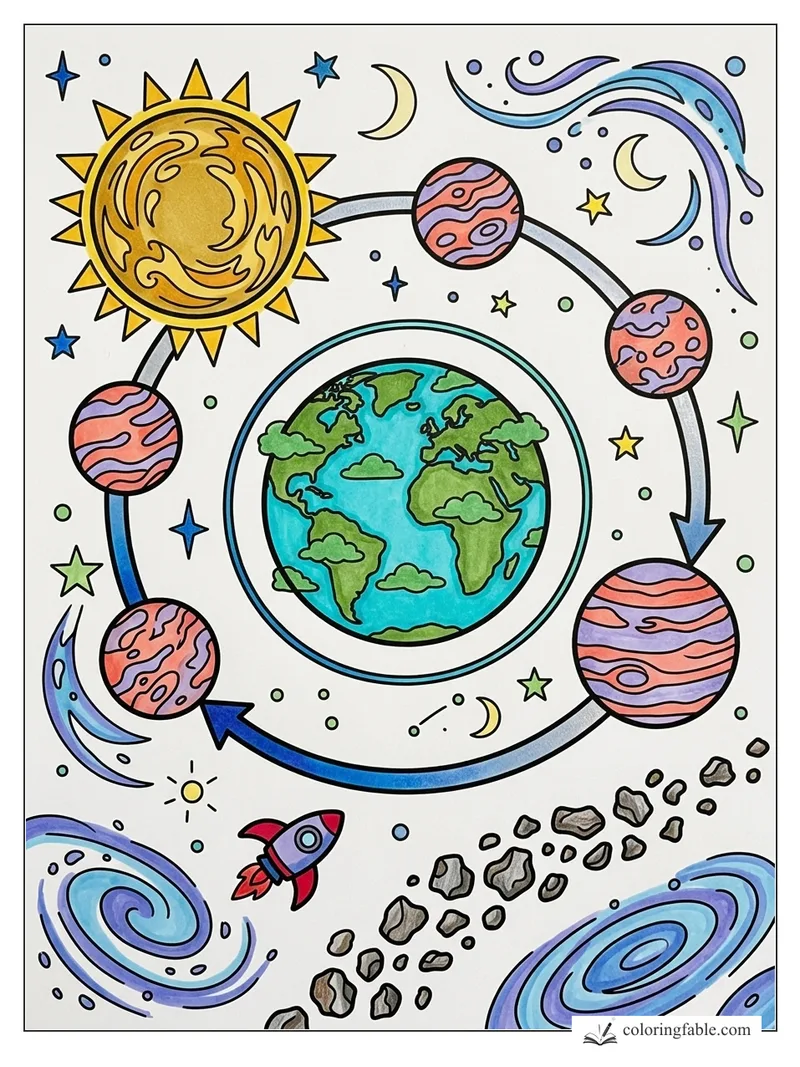
How Earth Got Its Orbit Arrows — Past the soft hiss of the Milky Way, Edda polished loose stardust from the crossing where many paths curled around Earth. Read the full story →
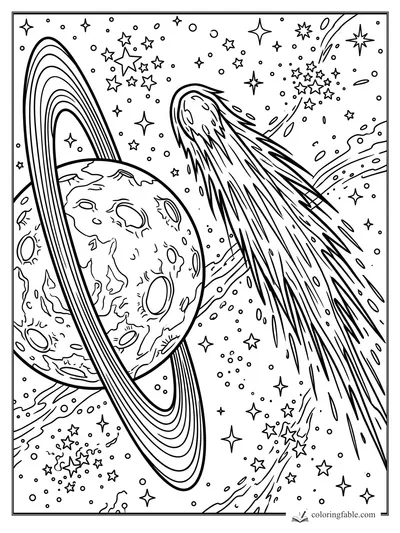
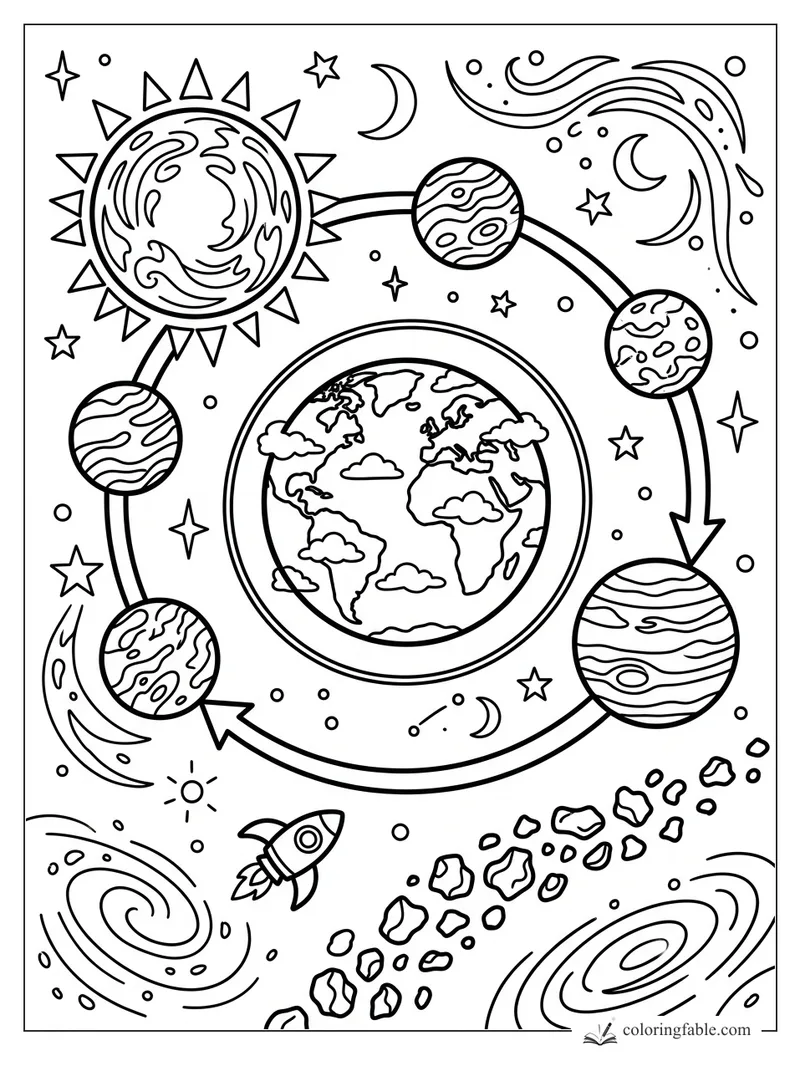
Past the soft hiss of the Milky Way, Edda polished loose stardust from the crossing where many paths curled around Earth. She wanted one thing before moonrise: to guide Brindle Comet back to the cold dark where comets sleep. But every planet rolled in a different rhythm, and Brindle’s tail kept trembling like a candle flame in wind.
“No one will see if I take the long way,” Edda whispered, and steered her tiny rocket toward the rough asteroid belt. The stones clicked and clacked against one another. Inside the smallest rock, where nobody thought to look, she found a folded strip of sky, thin as onion skin and warm as a held hand. When she opened it, bright arrow-shapes slipped out and settled along the safest curves around Earth.
Edda did not write her name on them. She only tucked the last arrow beside Brindle’s path and watched the comet glide home without a wobble. Ever since, Earth’s little neighborhood has kept its arrowed orbit roads, left by a helper who asked for no thanks. If you follow those arrows with your finger, can you find the hidden belt that first clicked and clacked?