Why Passionflowers Keep Watch — At the west end of the glasshouse, where wet stone smelled of rain and old iron, Cassian set himself a private trial: he would count every filament of the pale vine-star before the conservatory clock struck twelve. Read the full story →
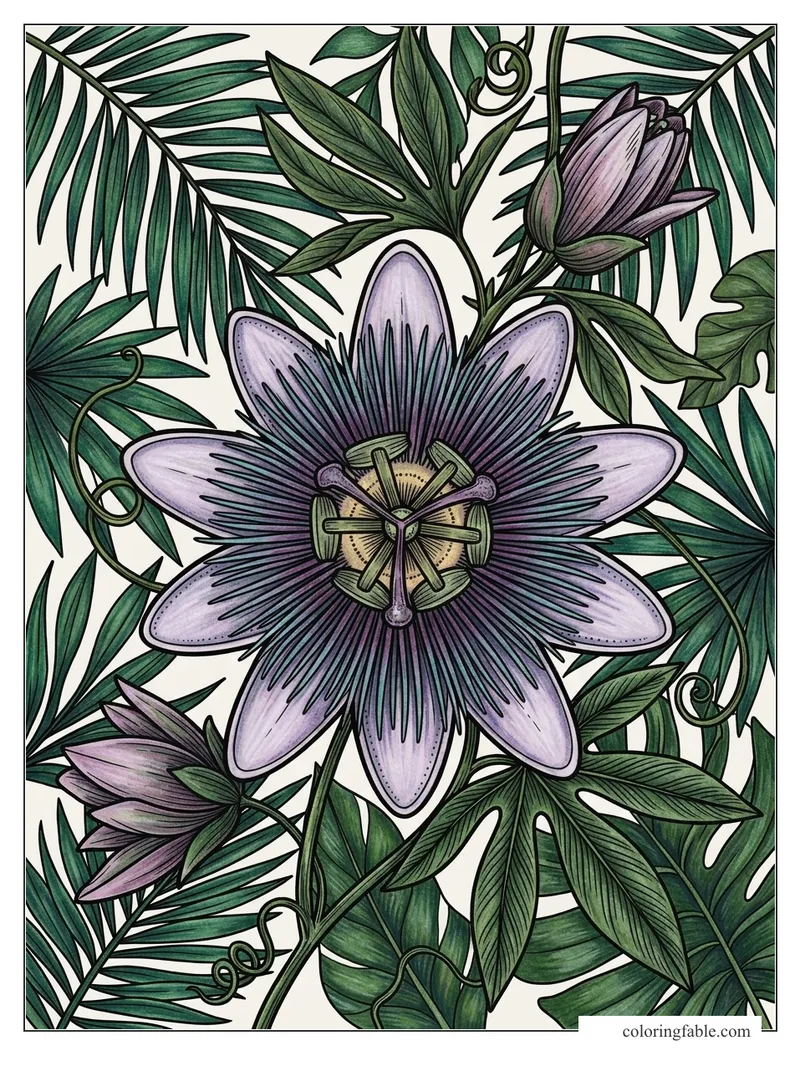
At the west end of the glasshouse, where wet stone smelled of rain and old iron, Cassian set himself a private trial: he would count every filament of the pale vine-star before the conservatory clock struck twelve. He had been told the flower opened all at once, but the bloom proved more secretive. One thread lifted, then another, each as fine as a drawn hair, while the closed buds nearby held their breath in green silence.
Mist silvered the panes. A tendril, curled like a question mark, brushed Cassian’s sleeve, and the flower’s center gave a soft wooden tick. Not from the clock tower—from inside the crown. He waited instead of reaching. At the last bell, the stamens turned and locked over the filaments like tiny hands over a dial, and a moth hidden under a palm rib slipped safely through the ring before the night beetles woke.
Cassian wrote only one line in the ledger: the vine keeps time for small travelers. Ever since, passionflowers have worn their many spokes around a watchful center, opening slowly for anyone patient enough to hear the tick.