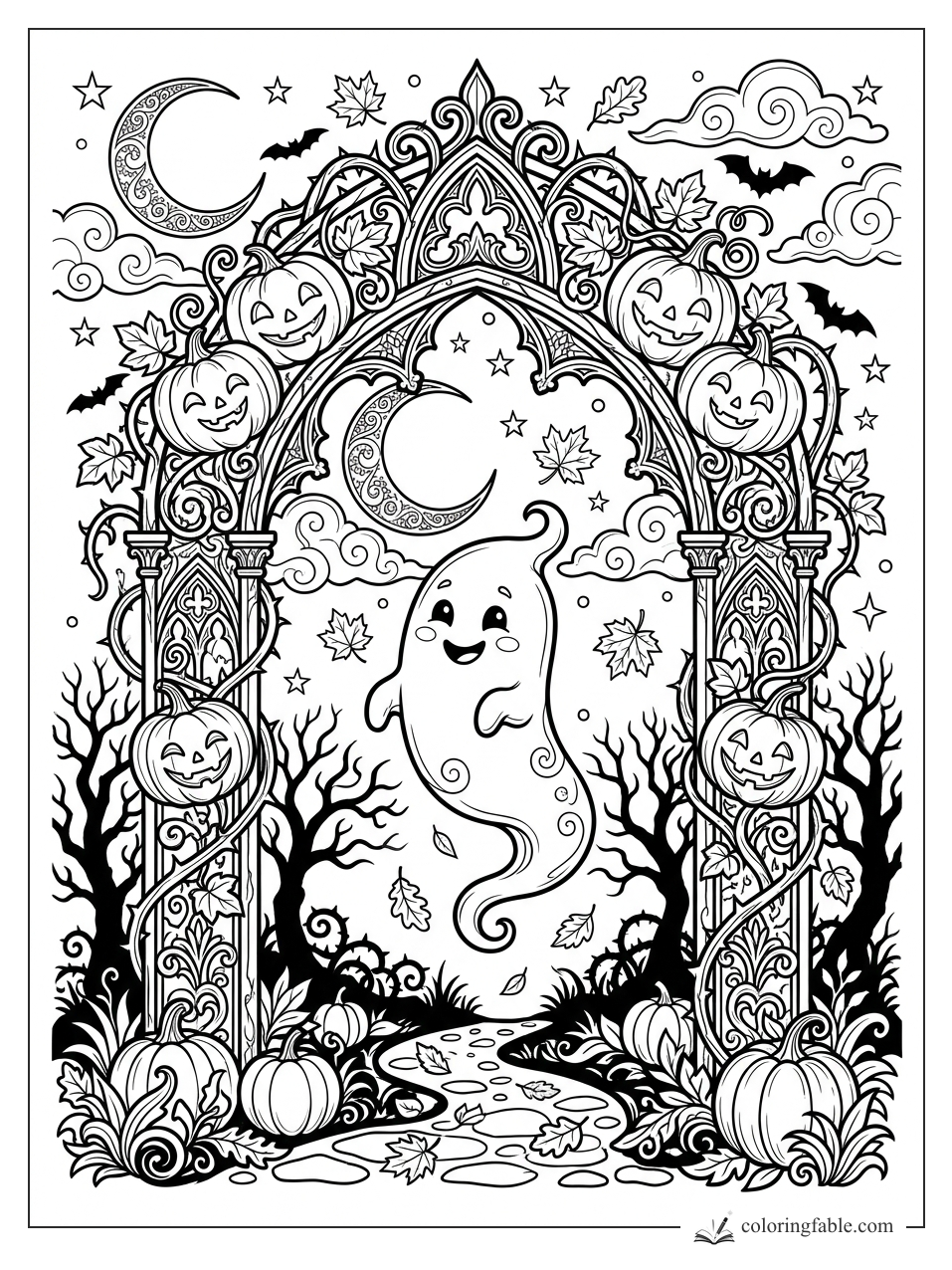
Calder’s Moon-Gate Game — Every evening, Calder folded fallen leaves into counters and arranged them along the black stone path, inventing rules no one else had asked for: three maple points meant whisper, one oak curl meant turn, and a pumpkin grin meant begin again. Read the full story →
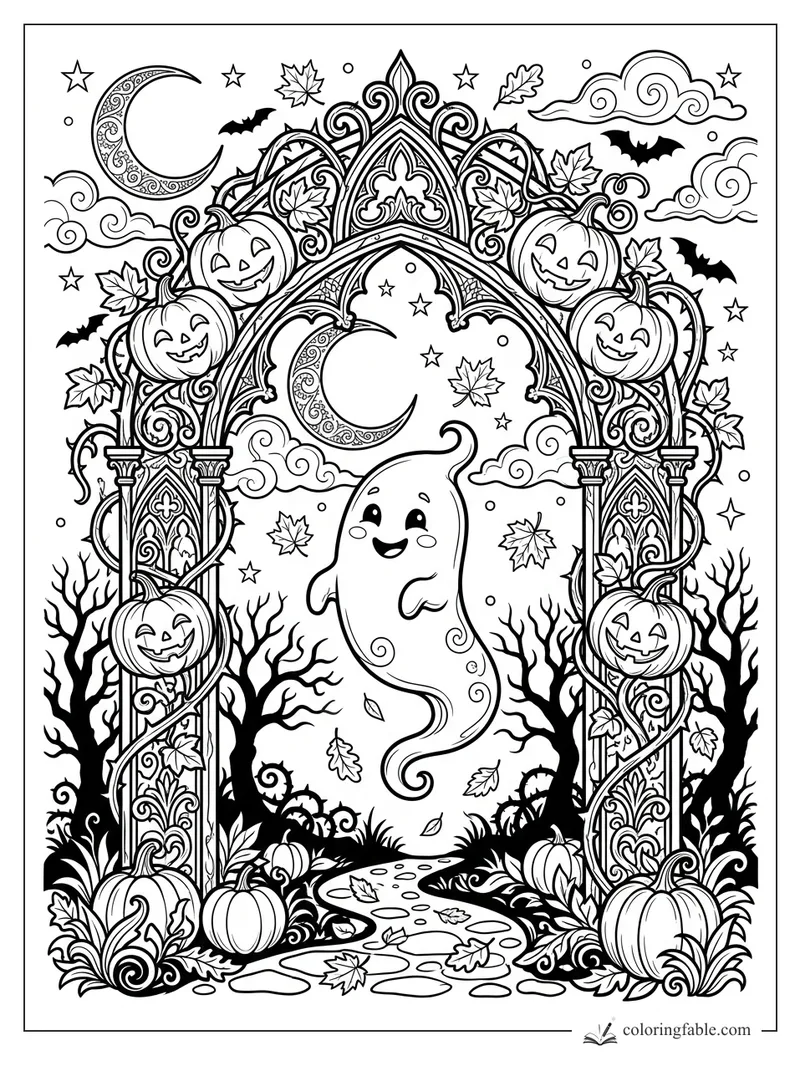
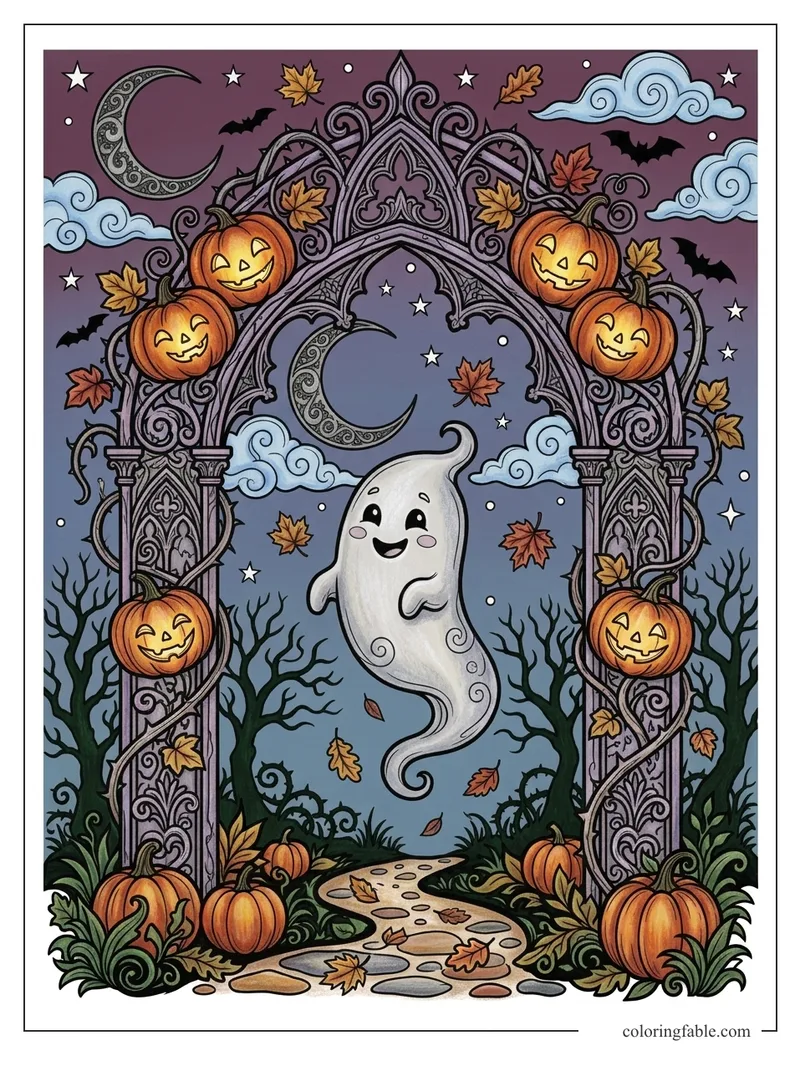
Every evening, Calder folded fallen leaves into counters and arranged them along the black stone path, inventing rules no one else had asked for: three maple points meant whisper, one oak curl meant turn, and a pumpkin grin meant begin again. The grove smelled of damp bark and cold iron, and his little game clicked softly under his hands like buttons in a box.
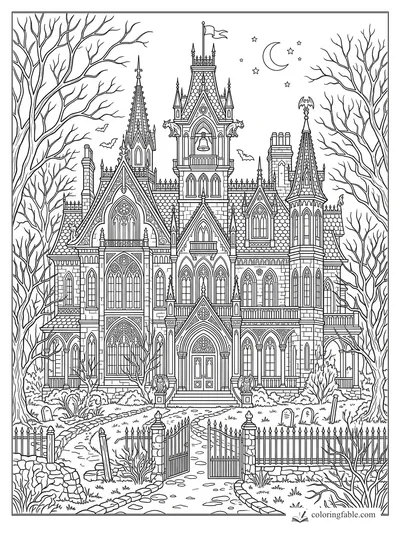
Until one night, the crescent over the gate copied his silver ink, curve for curve. Because of that, Calder added a new rule: if the moon answered, the arch could play. Because of that, the carved pumpkins blinked awake, the bats circled like punctuation, and the vines tightened into a doorway he had not planned but somehow recognized.
At last, Calder placed the final leaf on the path and stepped back, proud enough to feel almost warm. The gate shimmered, not as a spell borrowed from the sky, but as something made from his own careful hands, his own rules, his own three maple points: whisper, turn, begin again.