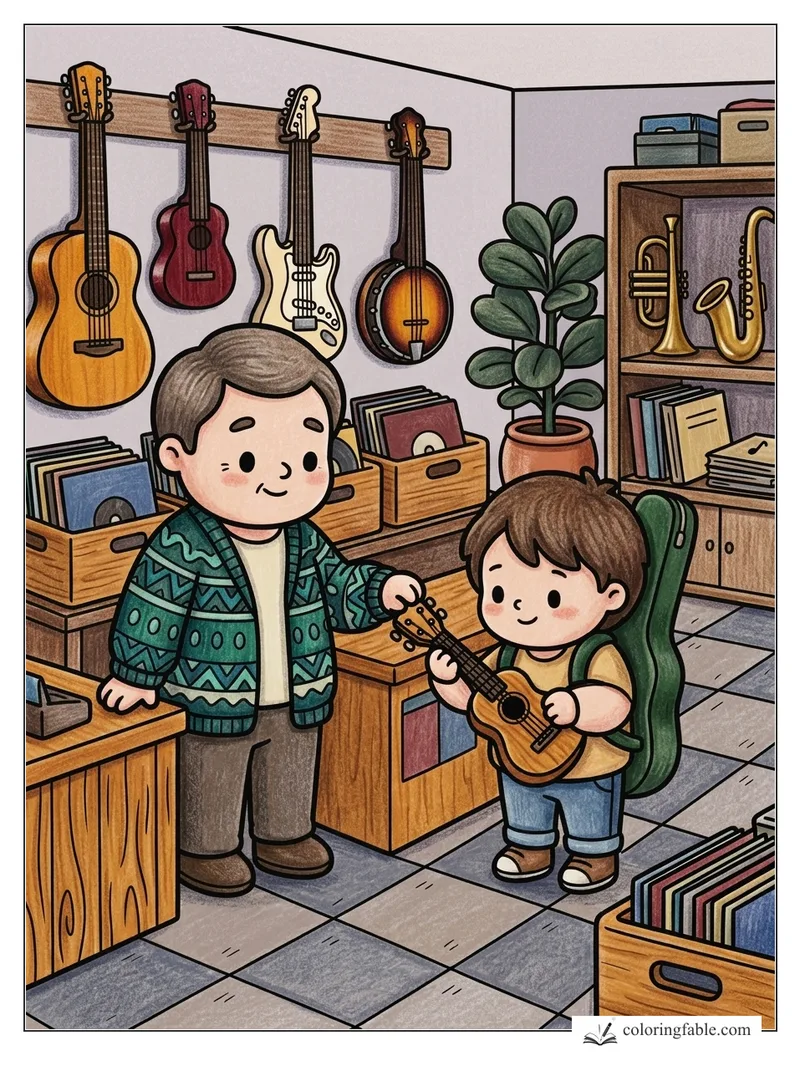
The Note Under the Counter — Every afternoon, Corvin set the brass egg timer behind the counter and tried to hear the shop’s quietest sound before it ran out: sleeve paper whispering, tile cooling, the fiddle-leaf fig tapping the shelf. Read the full story →
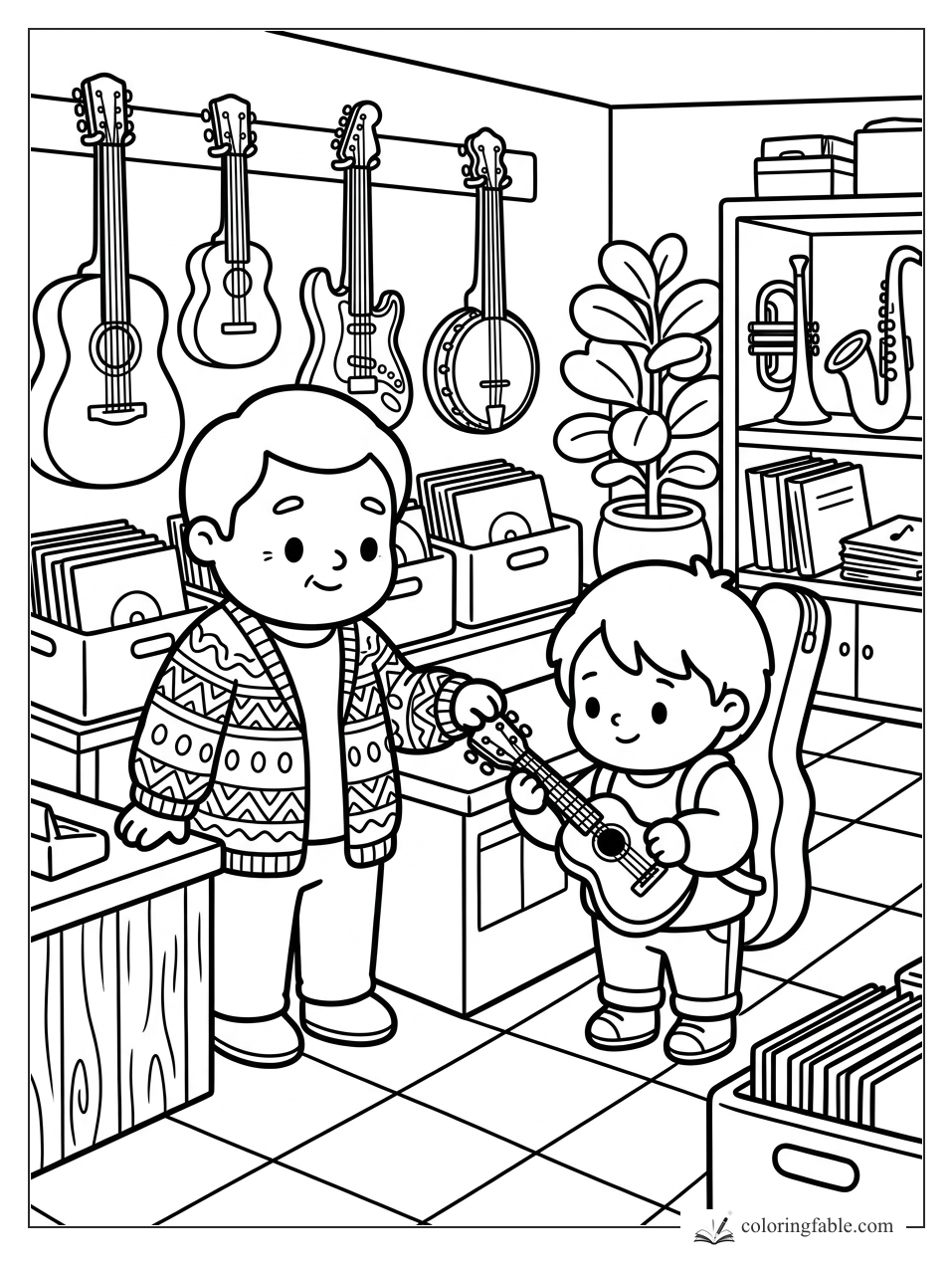
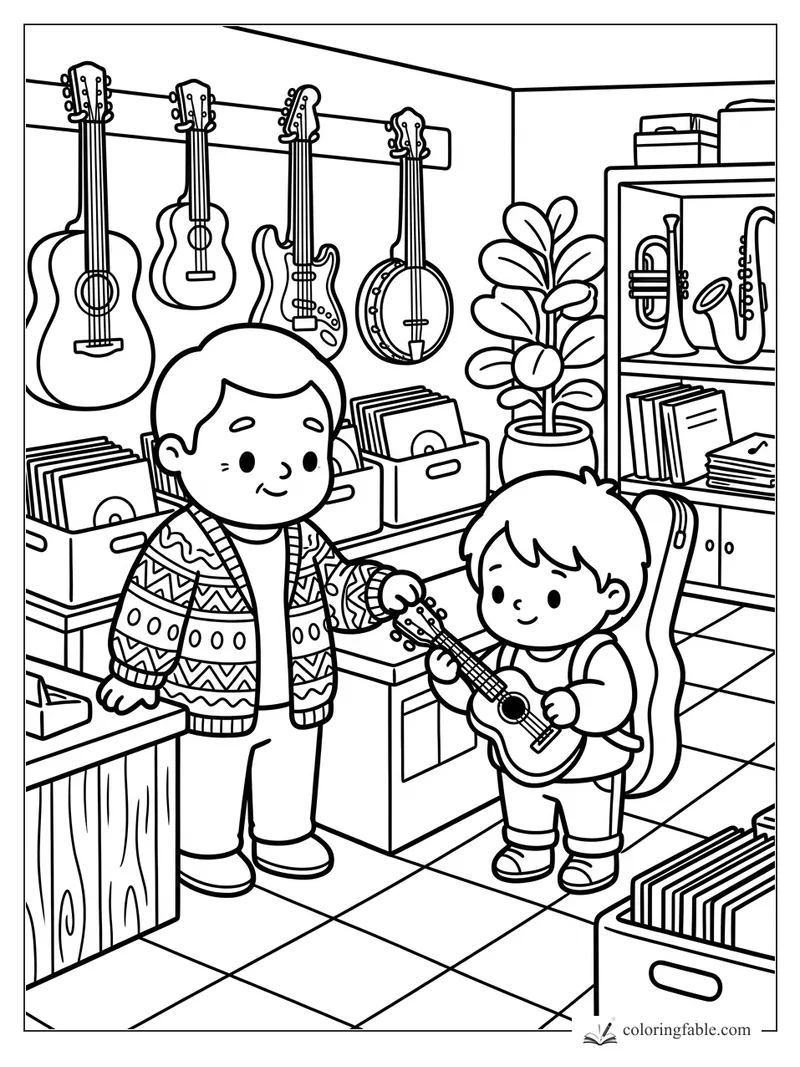
Every afternoon, Corvin set the brass egg timer behind the counter and tried to hear the shop’s quietest sound before it ran out: sleeve paper whispering, tile cooling, the fiddle-leaf fig tapping the shelf. He kept a list in pencil. Until one day, a child lifted the smallest guitar and plucked a note so thin it seemed to slip under the counter.
Because of that, Corvin knelt and found a loose floor tile humming against his fingertips. Because of that, he slid it aside and uncovered a curled staff of music, smelling faintly of dust and cedar, with one empty bar waiting at the end. When the child played again, the hanging banjo gave a round, moonlit thrum, and the horns on the shelf answered like sleepy gold birds.
Finally, Corvin wrote the tiny note into the empty bar. The egg timer rang, but nobody moved. The shop had not become louder; it had become deeper, full of questions running one after another through the hush—sleeve paper whispering, tile cooling, and the quietest sound still escaping his pencil.