Why Thorn Windows Remember Moonlight — At the edge of the chapel conservatory, Lenore set one black leading strip, then another, listening for the soft tick of cooling glass. Read the full story →
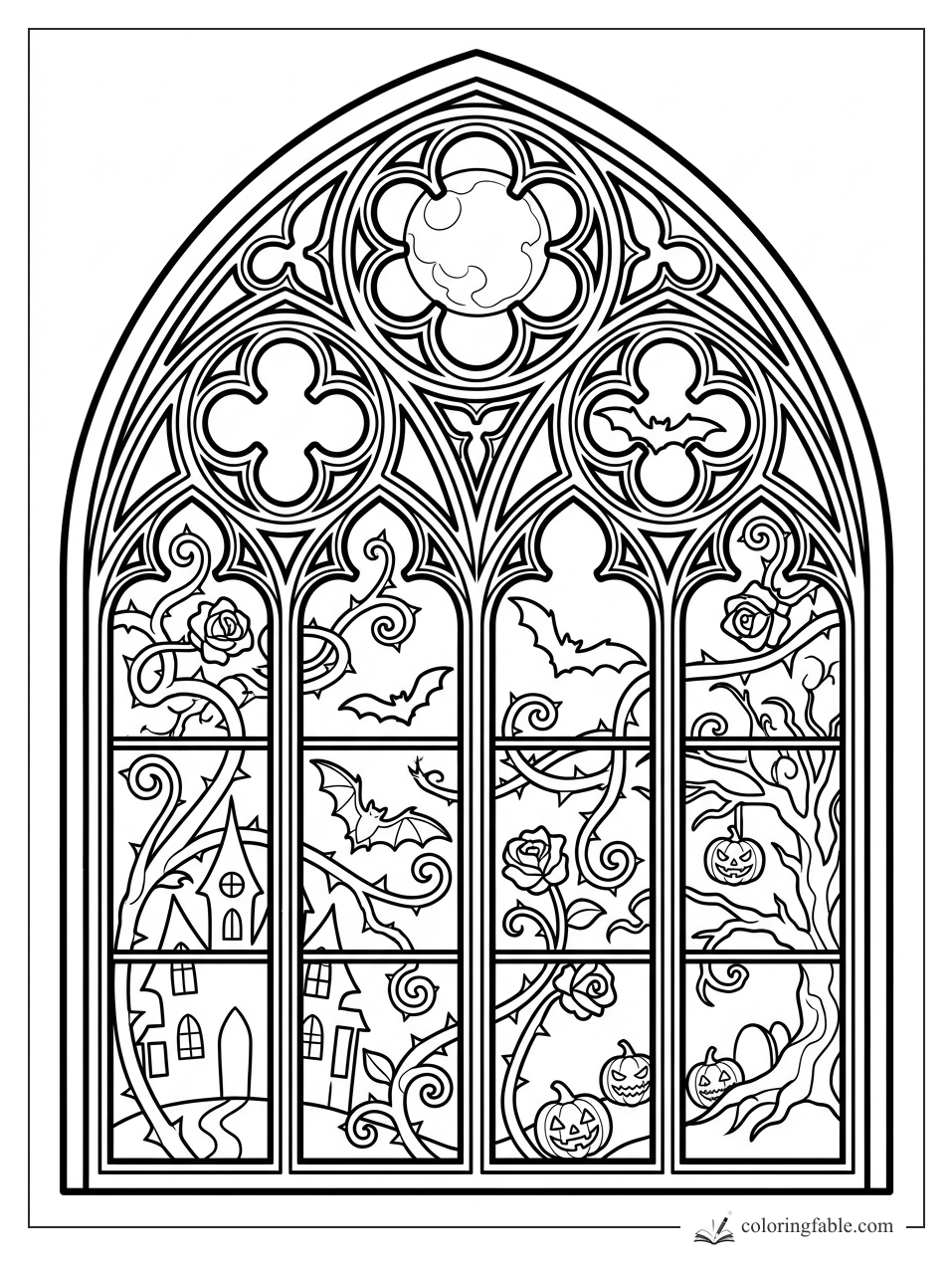
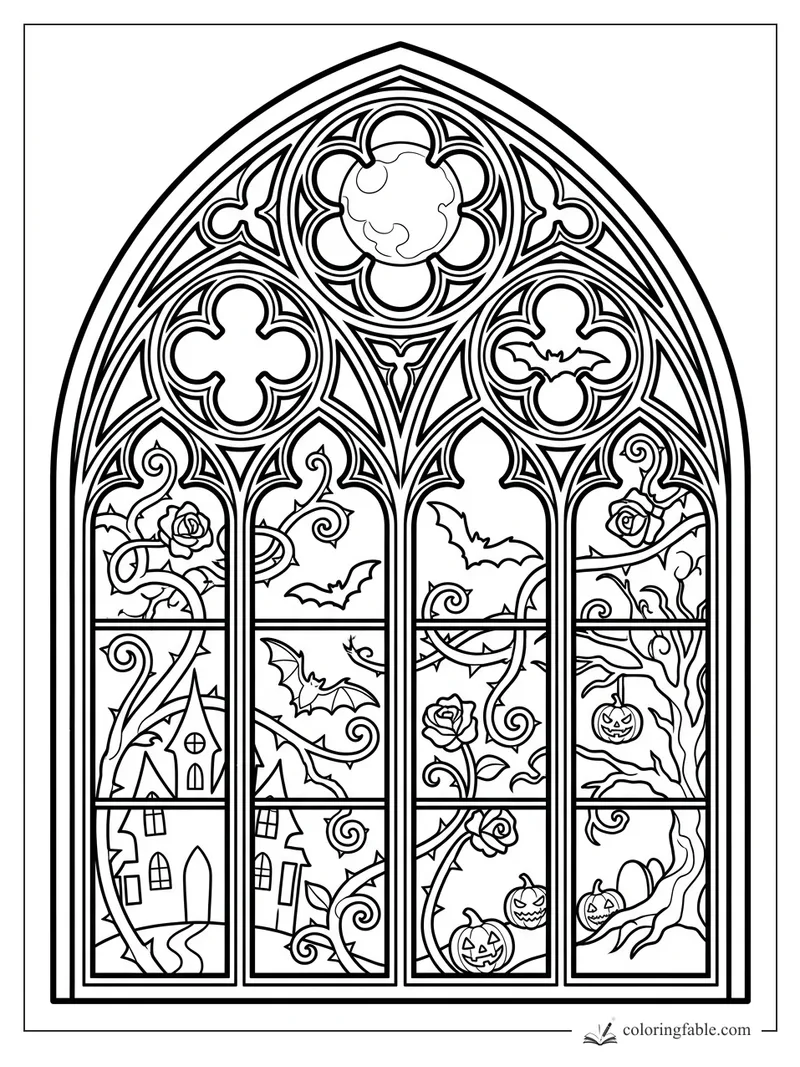
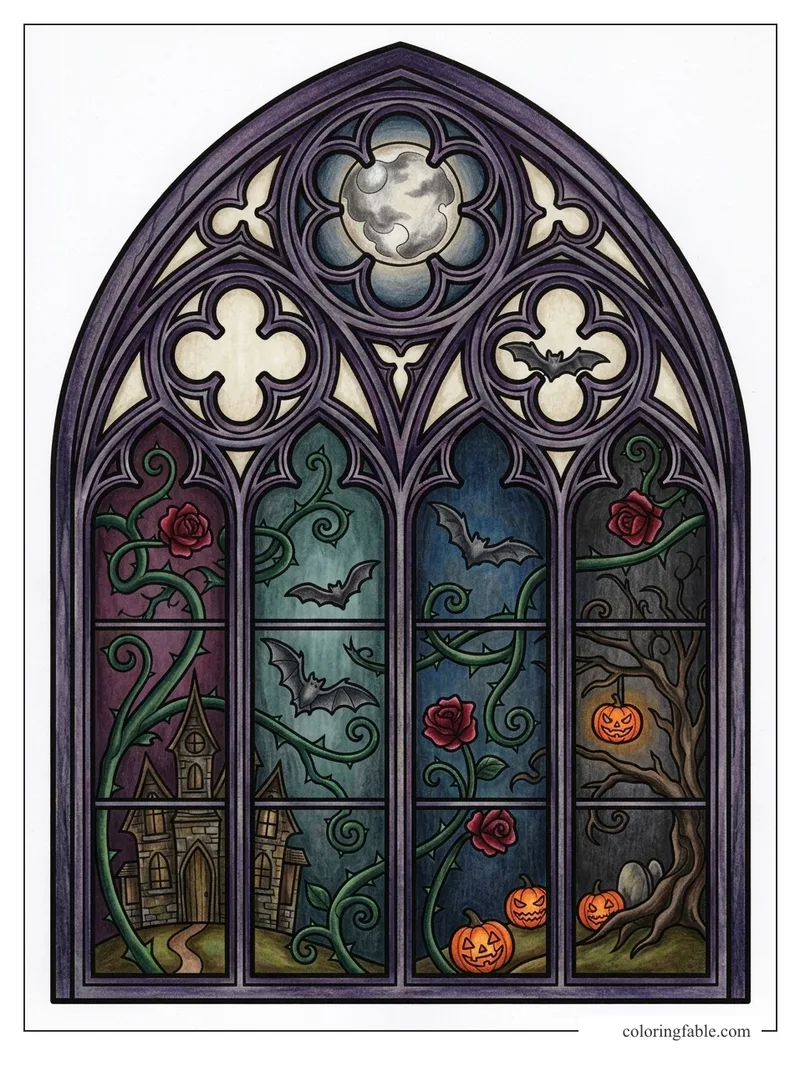
At the edge of the chapel conservatory, Lenore set one black leading strip, then another, listening for the soft tick of cooling glass. She wanted the high window to hold moonlight past midnight, not merely show it for an hour and lose it. For seven nights the panes stayed blank as water. Wax smoke curled from her lamp, roses tapped dry thorns against the sill, and the crooked roofs beyond the garden leaned like listeners.
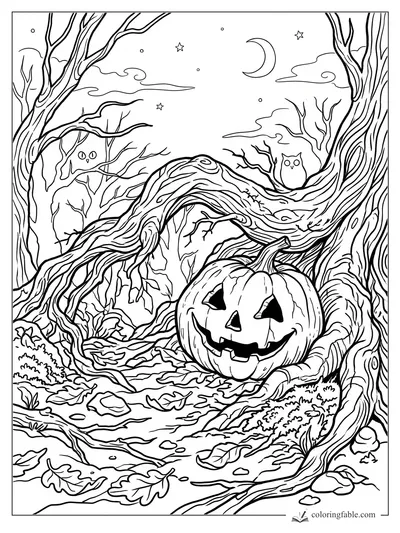
On the eighth night, while she waited without touching her tools, a root no thicker than thread slipped up through the stone crack. It carried a pumpkin seed in its curl and spoke in the papery voice of dead leaves. “Glass forgets what rushes through it,” it said. “Ask what waits.” Lenore held still. The roses opened their thorns. The bats folded themselves into the dark arches. Even the little pumpkins hushed their candle-smell.
At last the moon crossed the top round pane, cloudy and slow, and the root pressed its seed to the glass. Silver stayed there, caught not by force but by patience, blooming into every curve and thorn. Since that night, Halloween windows with roses and bats keep a pale moon at their crown, because Lenore waited long enough for the glass to remember.