Why Surfboards Have Pointed Noses — By the late-afternoon tide, Calder had given himself a challenge: ride one wave without shouting, laughing, or even squeaking. Read the full story →
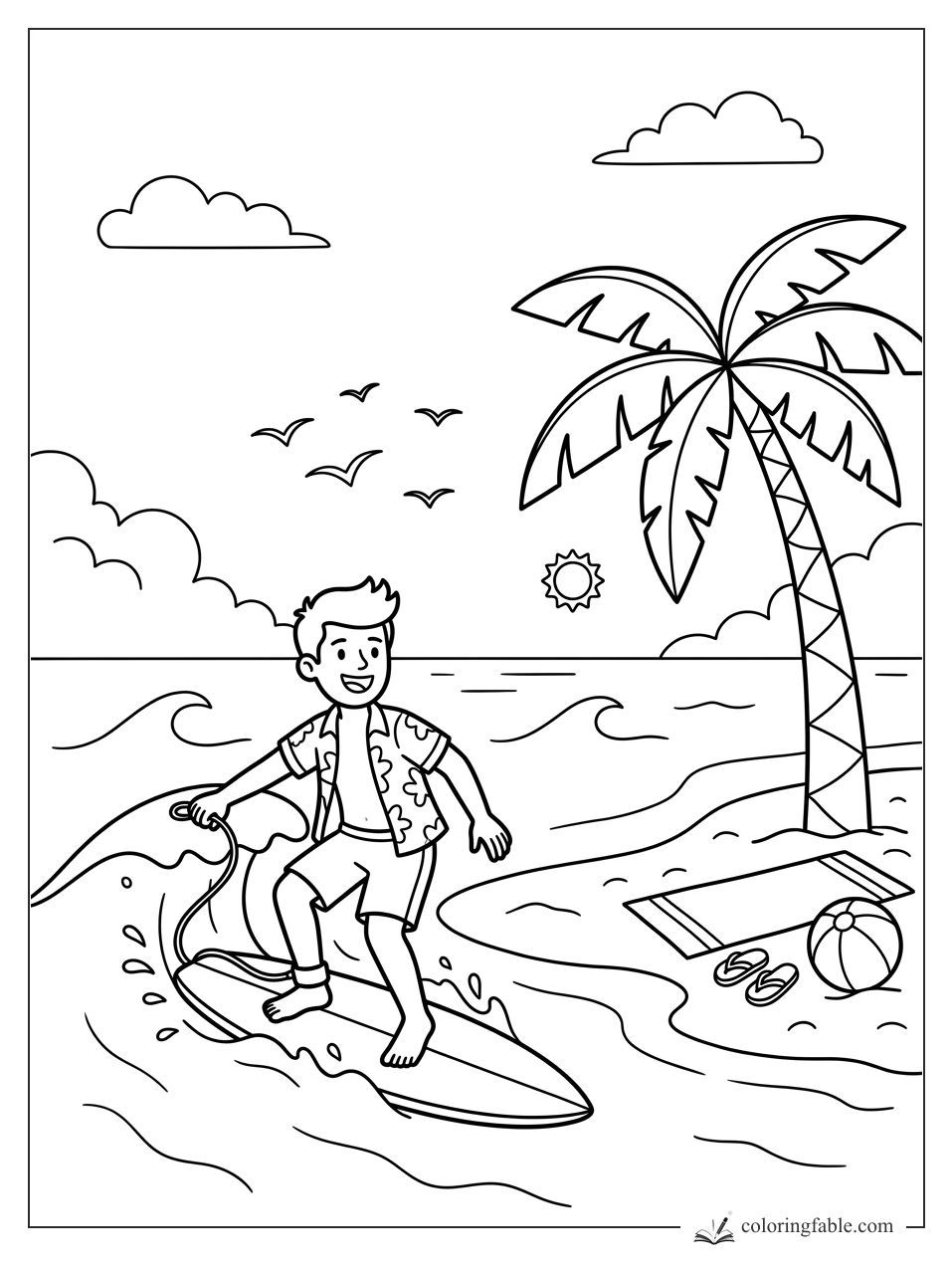
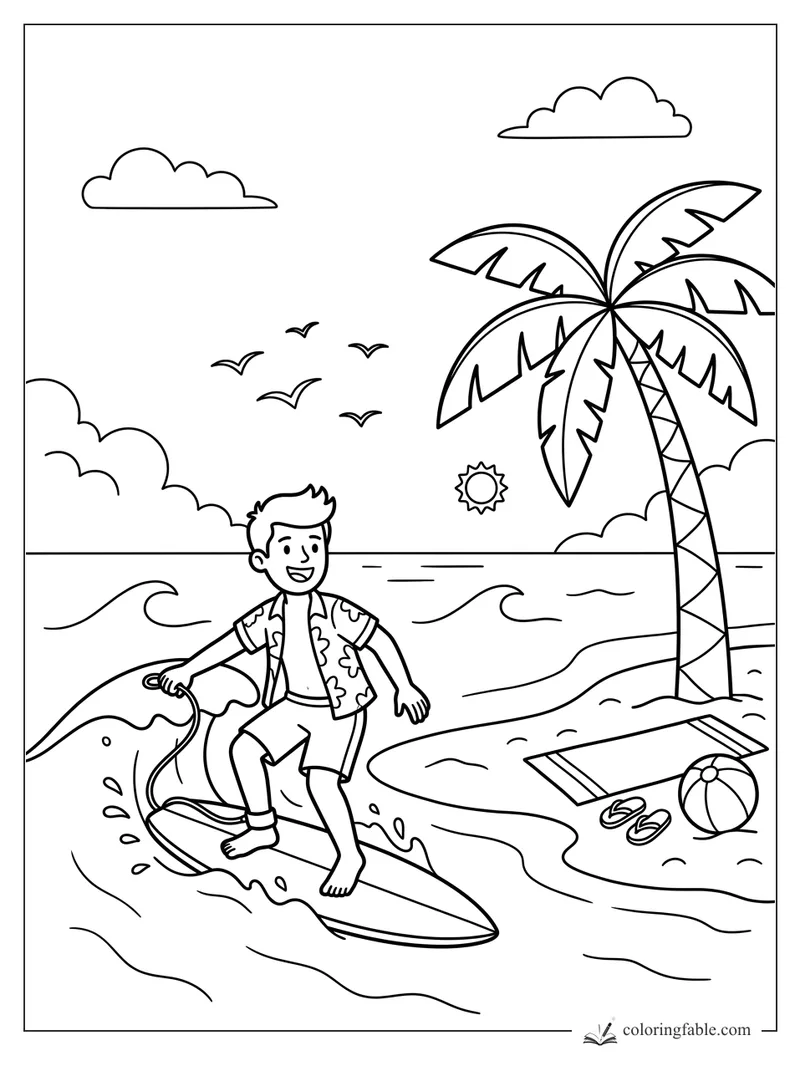
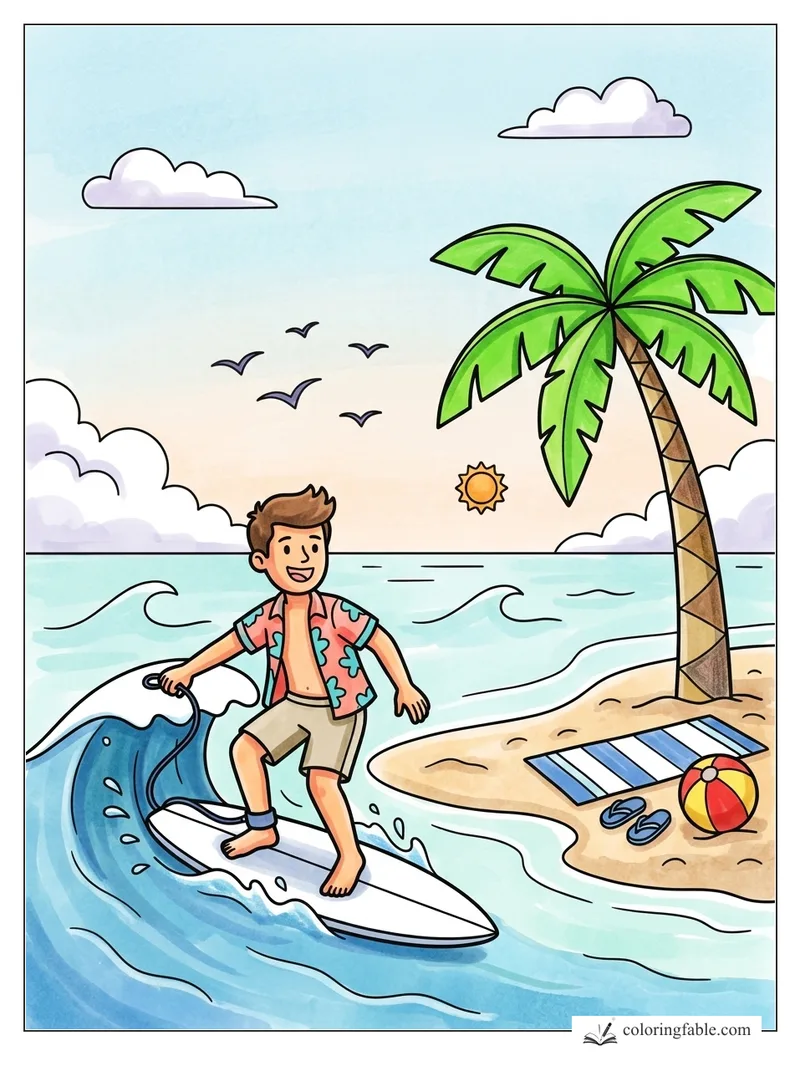
By the late-afternoon tide, Calder had given himself a challenge: ride one wave without shouting, laughing, or even squeaking. The beach smelled of coconut sunscreen and warm rope from the rental shack, and every wave hissed like it knew a secret. Three times Calder wobbled, grinned too soon, and splashed down with a salty blurt. “Quiet as a shell,” he whispered, climbing back on.
Near the leaning palm, a small wave rose with no foam at its lip. Calder waited. He did not paddle early. He did not cheer when the board lifted. Beneath him, something tapped the wood—tick, tick, tick—like a tiny beak. The rounded front of the surfboard began to sharpen, slowly parting the water instead of bumping it. Hidden silver fish slipped ahead, making a narrow path through the green-blue glass.
Calder rode all the way to the sand without a sound. Ever since, surfboards have kept pointed noses, so patient riders can follow the fish-road through a wave. If you spot the splashes by Calder’s board, you may find where the secret path begins.