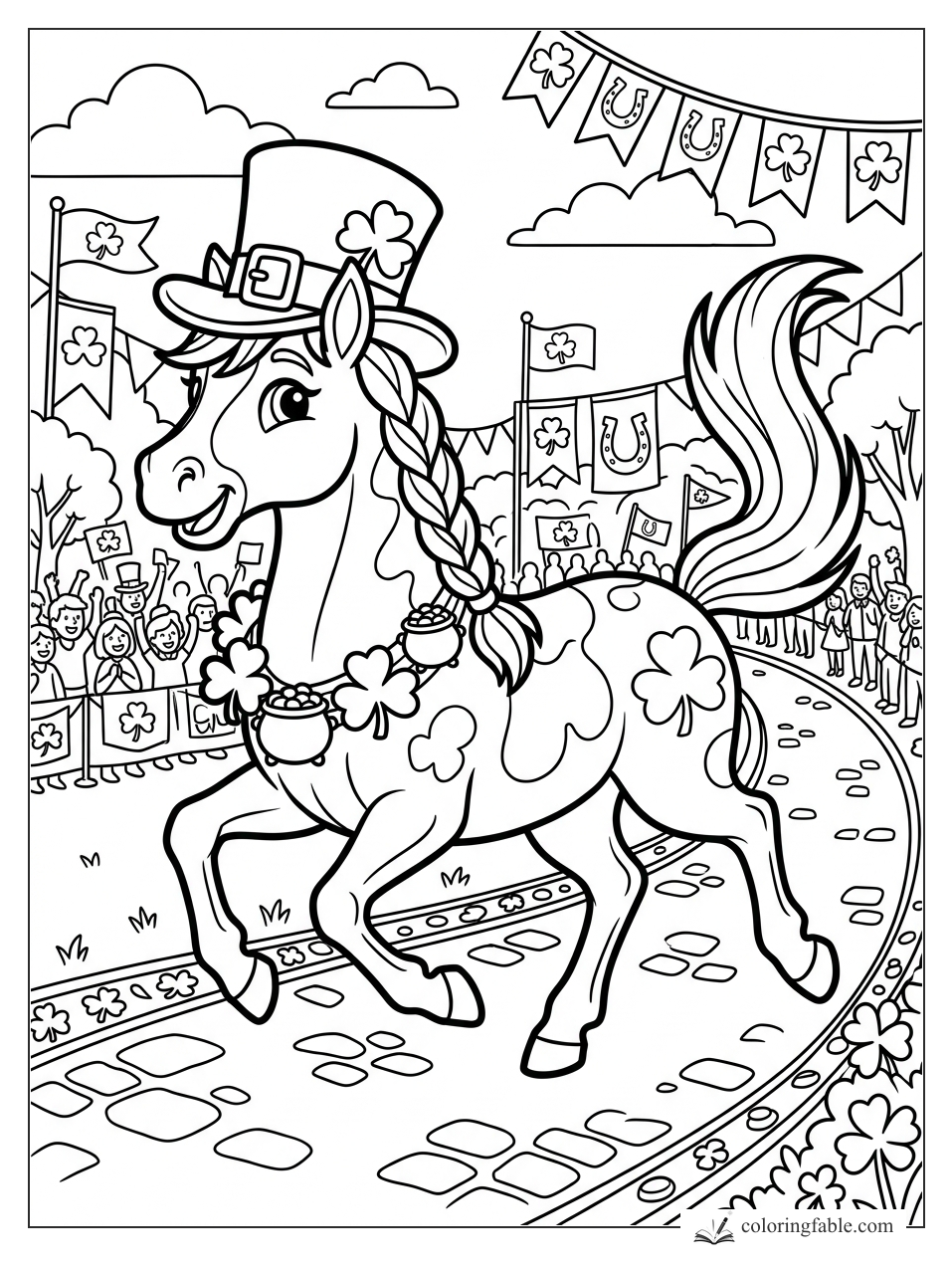
Why Parade Roads Wear Clovers — By breakfast, every brass horn in Glenwhistle had gone pom-pom-pah, and Finch had already set himself a dare: he would touch one clover charm to every bend of the parade road before the mayor’s bell rang. Read the full story →
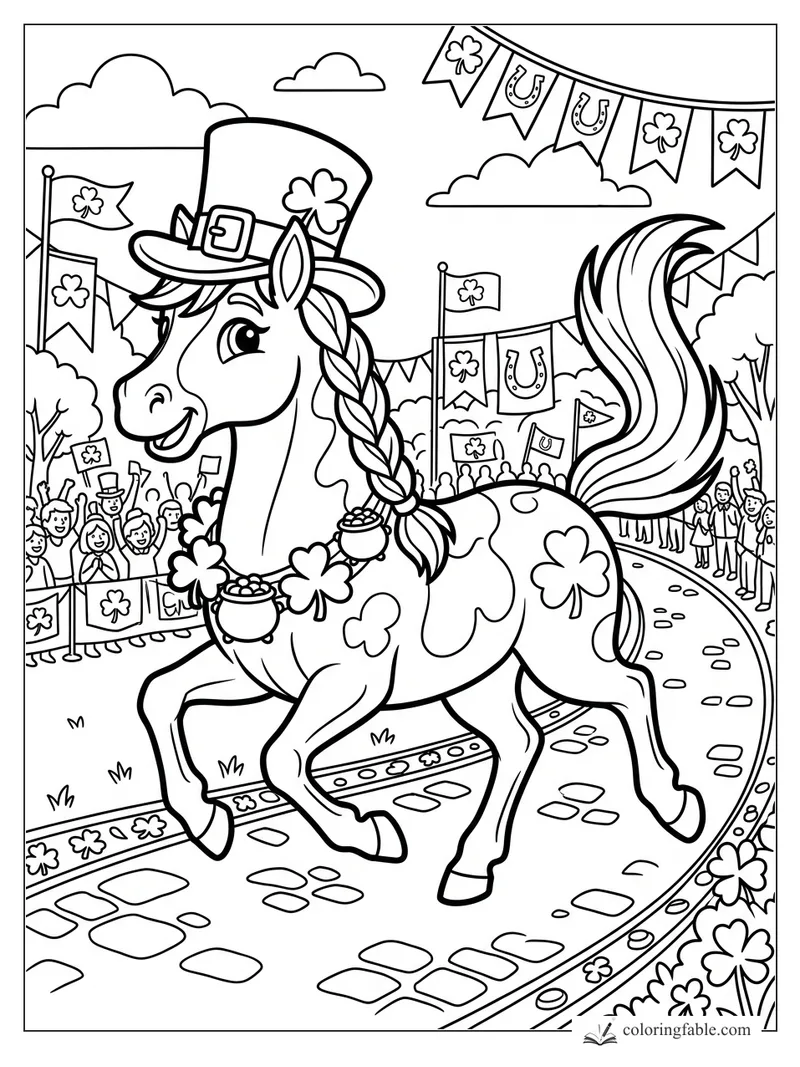
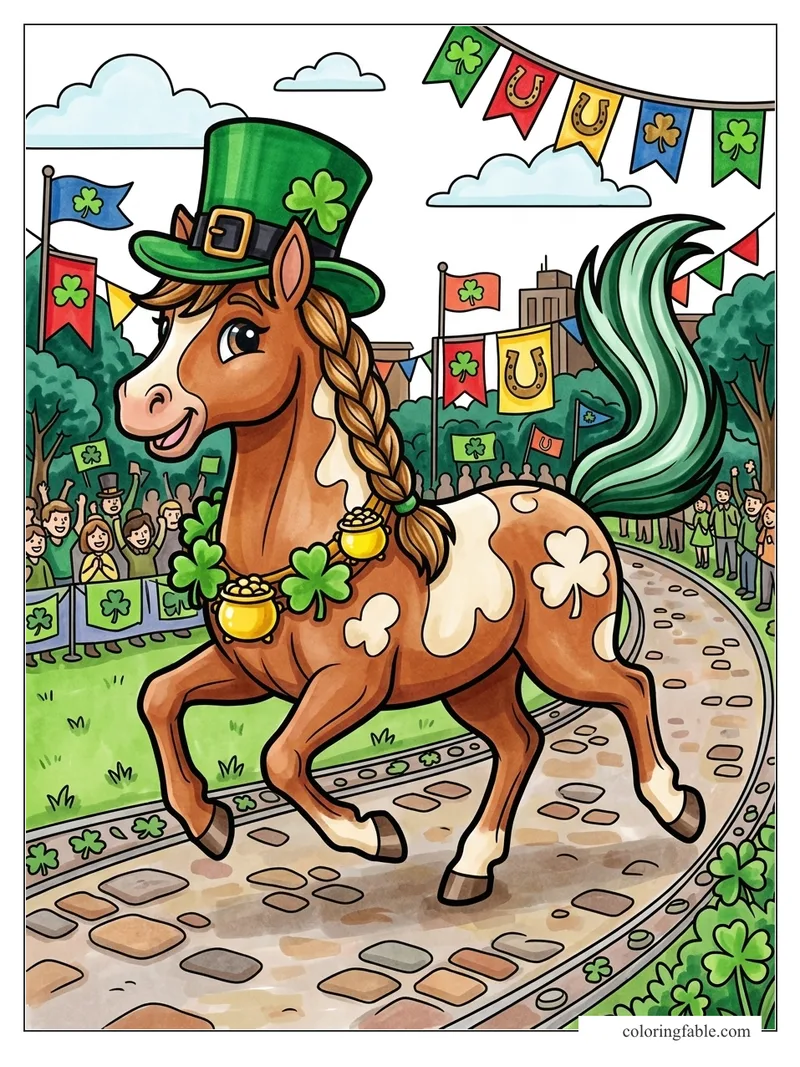
By breakfast, every brass horn in Glenwhistle had gone pom-pom-pah, and Finch had already set himself a dare: he would touch one clover charm to every bend of the parade road before the mayor’s bell rang. The charms clicked in his little gold pots, cool and smooth as rain pebbles. “No skipping the sneaky turns,” whispered Pip, the smallest flag-waver, as if the street might be listening.
Finch pranced past green flags, bunting, and cloud-shaped puffs of kettle-corn steam. First bend, clink. Second bend, clink. But at the last curve, where the cobbles curled like a question mark, his braid snagged on a loose banner string. The bell began to boom. Finch tugged once, then stopped. Under the string, the bare gray road looked left out, with no clover at all.
So Finch shook both pots at once. Clovers bounced out, pat-pat-pat, landing along the curb, between the stones, even beside the toes of the cheering children. The road seemed to grin under his hooves. Ever since that secret morning, parade roads in Glenwhistle wear clovers along their edges, and if you follow the tiny ones around the curve, you’ll know exactly where Finch belonged by breakfast.