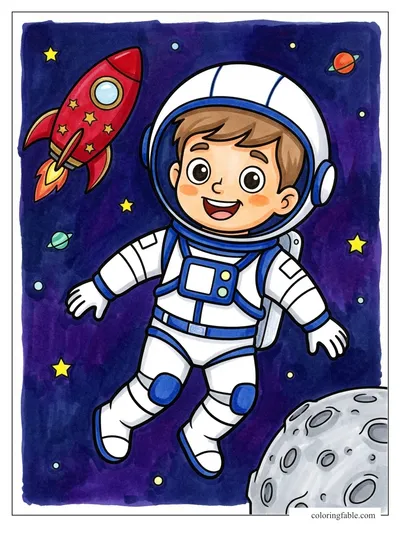
Why Rockets Wear Stars — The moon beacon would not blink. Read the full story →
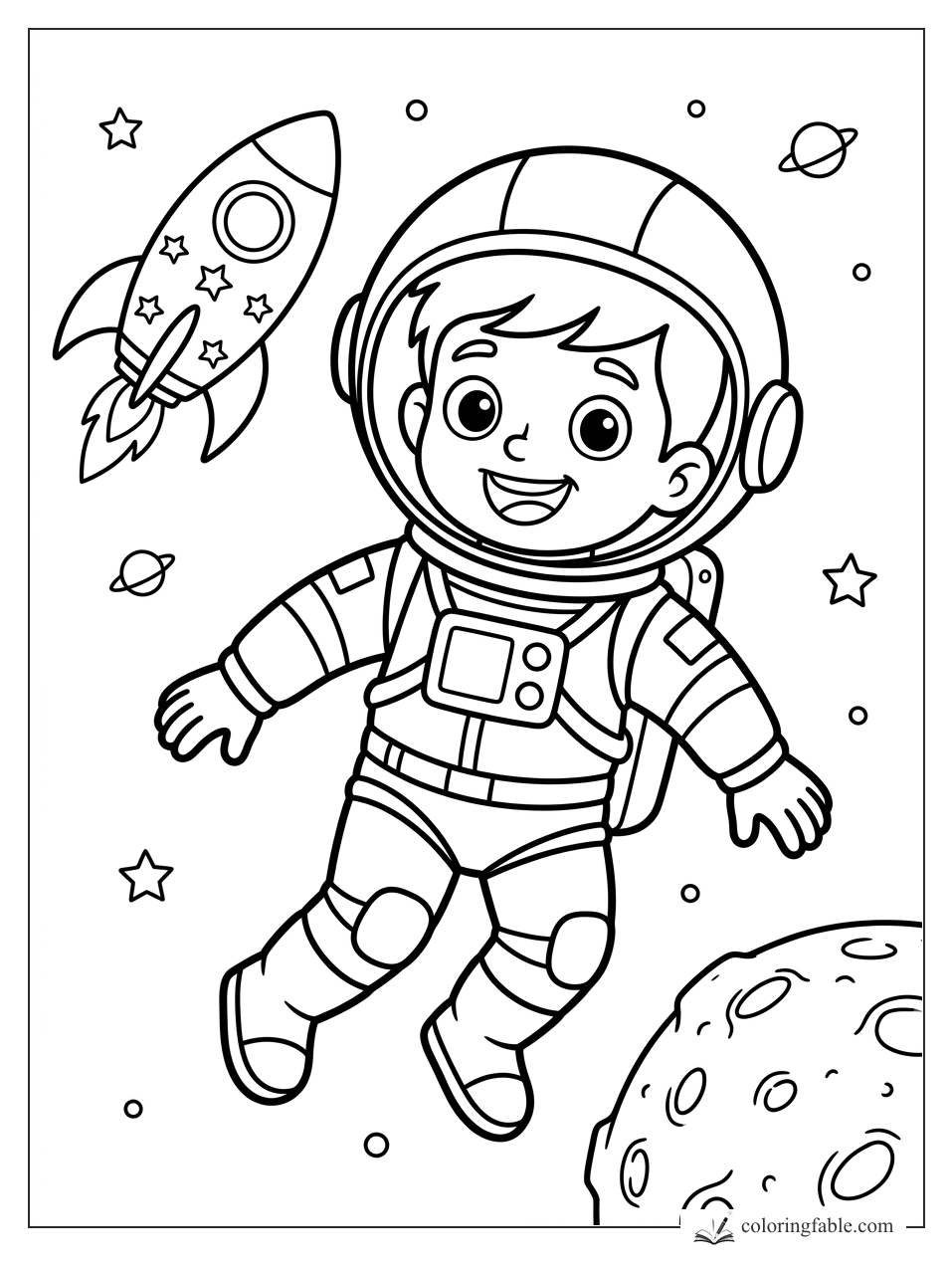
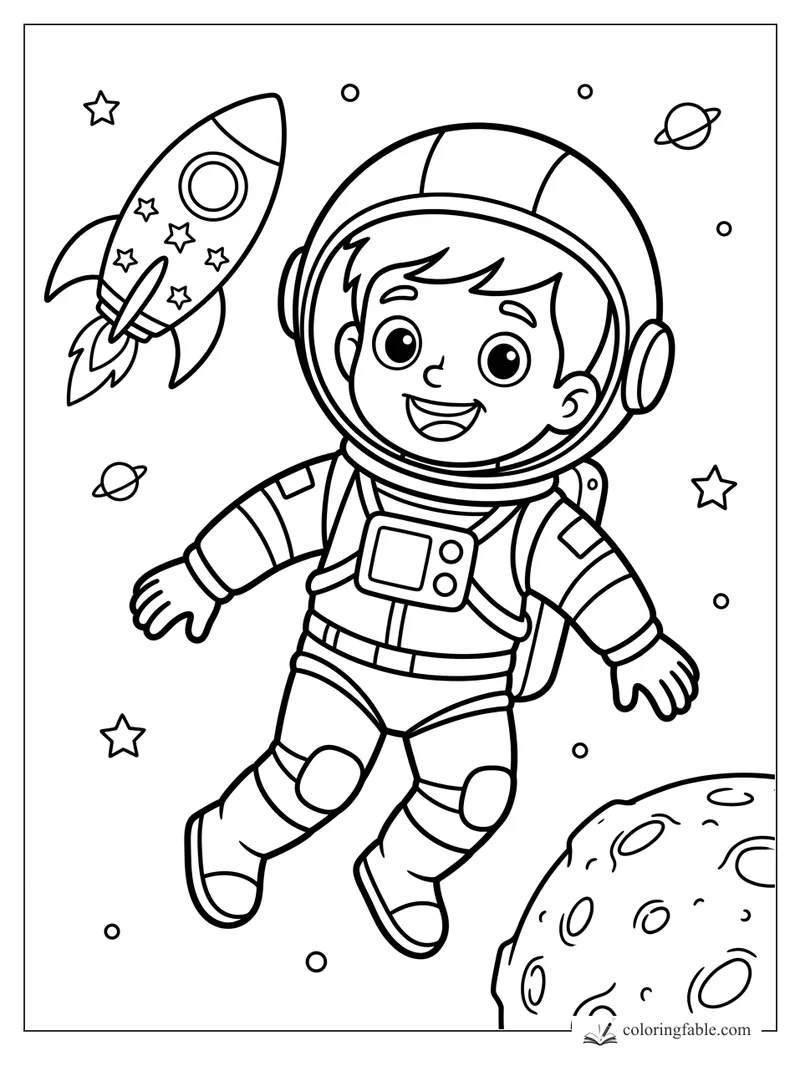
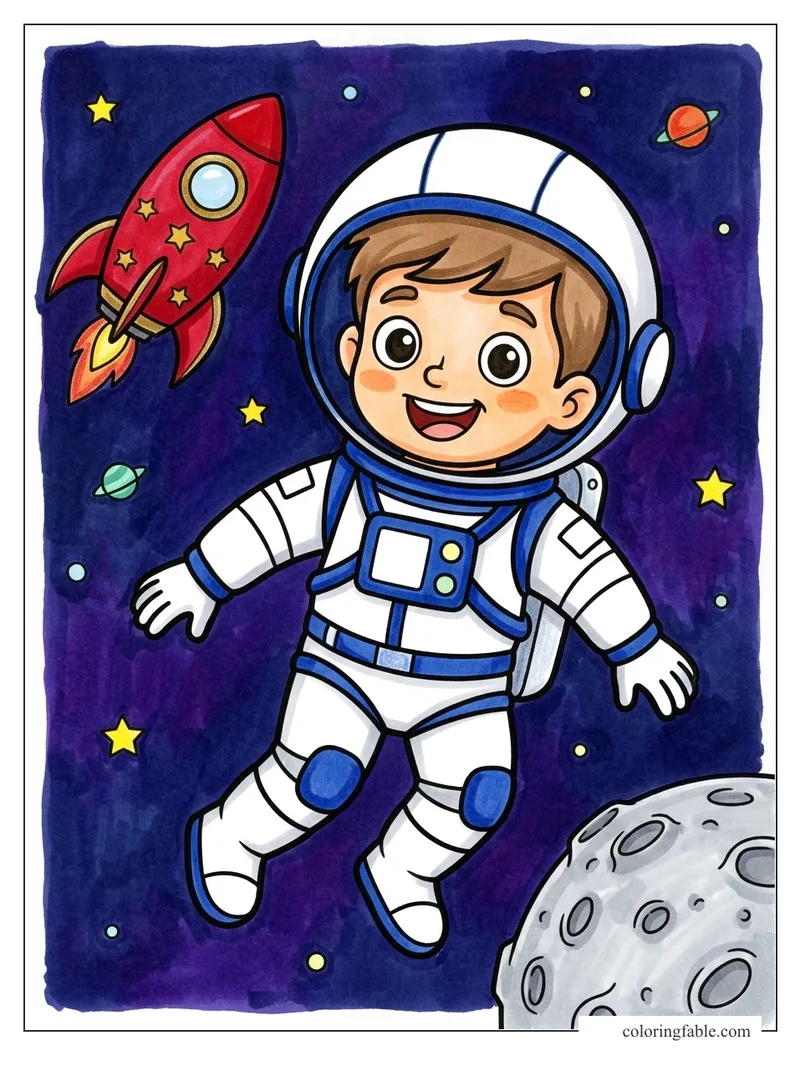
The moon beacon would not blink. Quill tapped its silver switch with one gloved finger, listening to the soft hiss of his air pack and the far-off hum of the rocket waiting behind him. He wanted to send one flash home before the moon slipped into Earth’s shadow, but the beacon stayed dark as a closed eye.
Then a tiny voice said, “You’re knocking too loudly.” From behind a crater floated a creature no bigger than Quill’s thumb, stitched from blue light and moon dust. It carried a brush tipped with a real star. “This beacon answers only to sky marks,” the star-mender whispered, and painted one bright star on the rocket’s nose. The rocket gave a warm purr. Quill leaned close, curiosity buzzing louder than his radio.
“Why there?” he asked. The mender dabbed more stars along the rocket’s side, each one smelling faintly like rain on warm sidewalk. At the fifth star, the beacon burst into silver blinks, and the shadow slid past harmlessly. Ever since, rockets wear stars so moon beacons know who is brave enough to come calling. If you spot the starry rocket beside Quill, can you guess which star woke the dark closed eye?