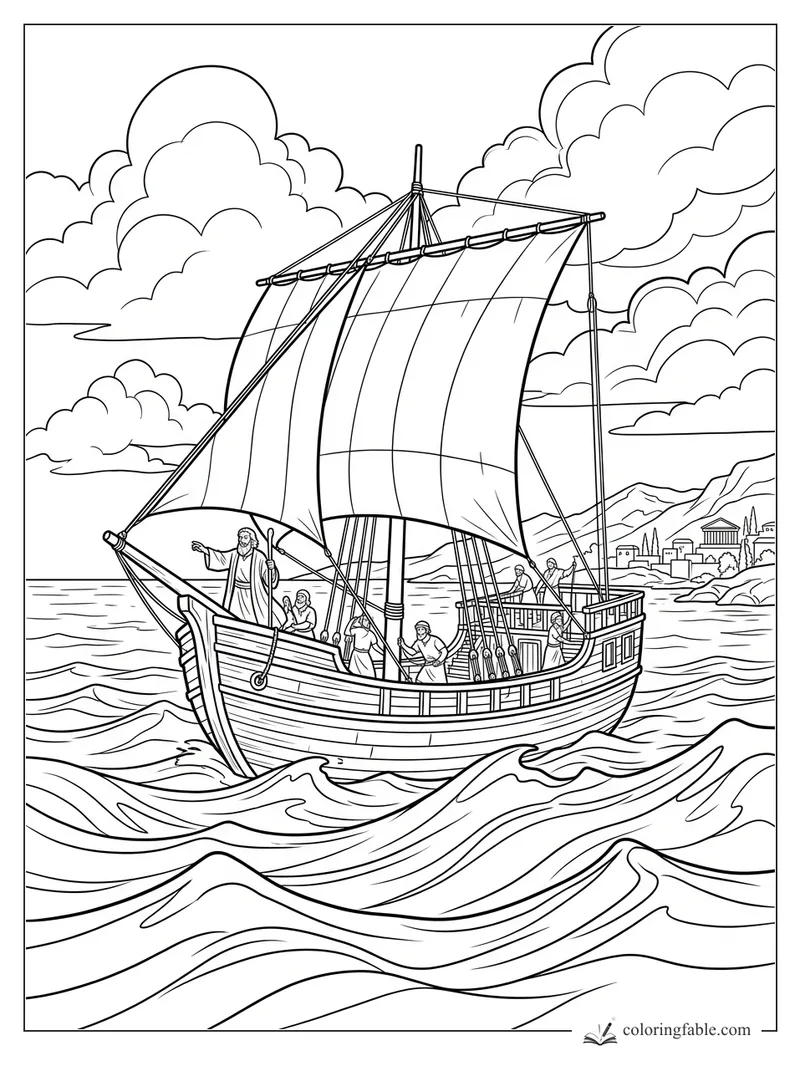
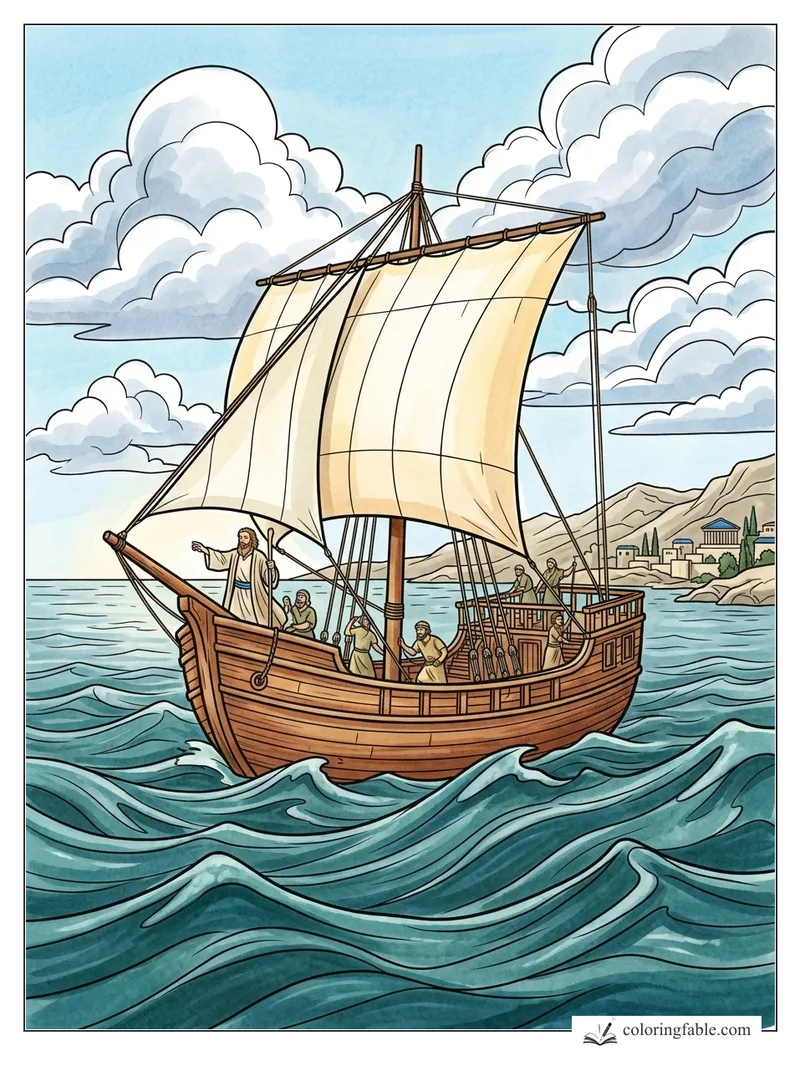
Why Sails Keep Quiet Lines — Before the squall, Uri pinched a scrap of sailcloth between his fingers and set himself a tiny challenge: one knot tied neatly before the boat crossed the black rock. Read the full story →
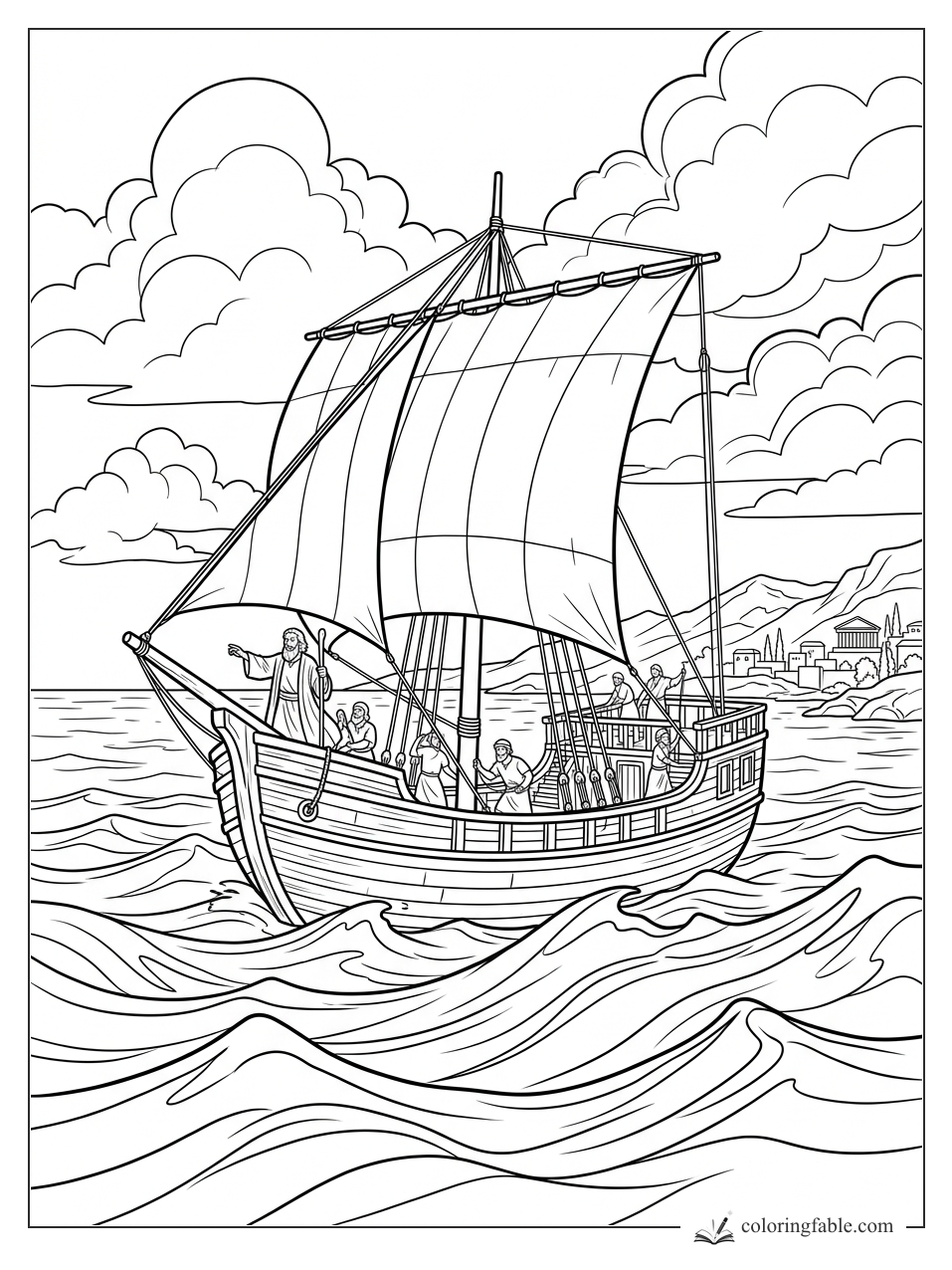
Before the squall, Uri pinched a scrap of sailcloth between his fingers and set himself a tiny challenge: one knot tied neatly before the boat crossed the black rock. The lake smelled of wet rope and fish scales, and the mast creaked like an old door. He wrapped, tucked, pulled—then the wind slapped the sail so hard his knot jumped loose.
Men shouted over the boom-boom of waves. Uri crawled to the mast, where loose cords whipped his cheeks. The Teacher stood near the bow, calm as lamplight, and lifted one hand. Uri did not feel brave enough to stand, so he did the smallest brave thing he could: he pressed his thumb on the nearest sail seam and held the rope there. “Stay,” he whispered, not sure if he meant the knot, the cloth, or his own knees.
The wind folded down. The water softened to hush-hush. When the crew mended the sail, they stitched extra lines where Uri’s thumb had held, so every sailor could find a steady place in sudden weather. Ever since, sails keep quiet lines across their cloth; trace one with your eyes, and you may find the small knot tied before the black rock.