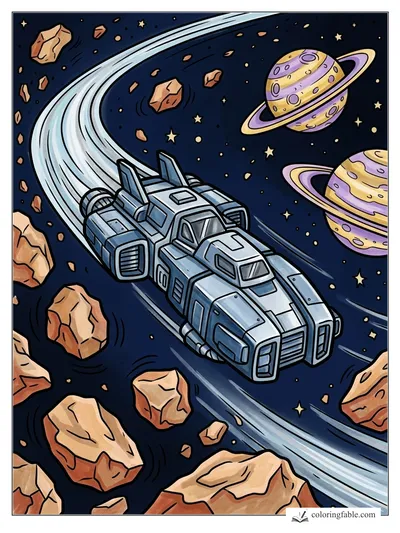
Why Asteroids Leave Curves — The quickest way through the Gravel Belt was supposed to be straight. Read the full story →
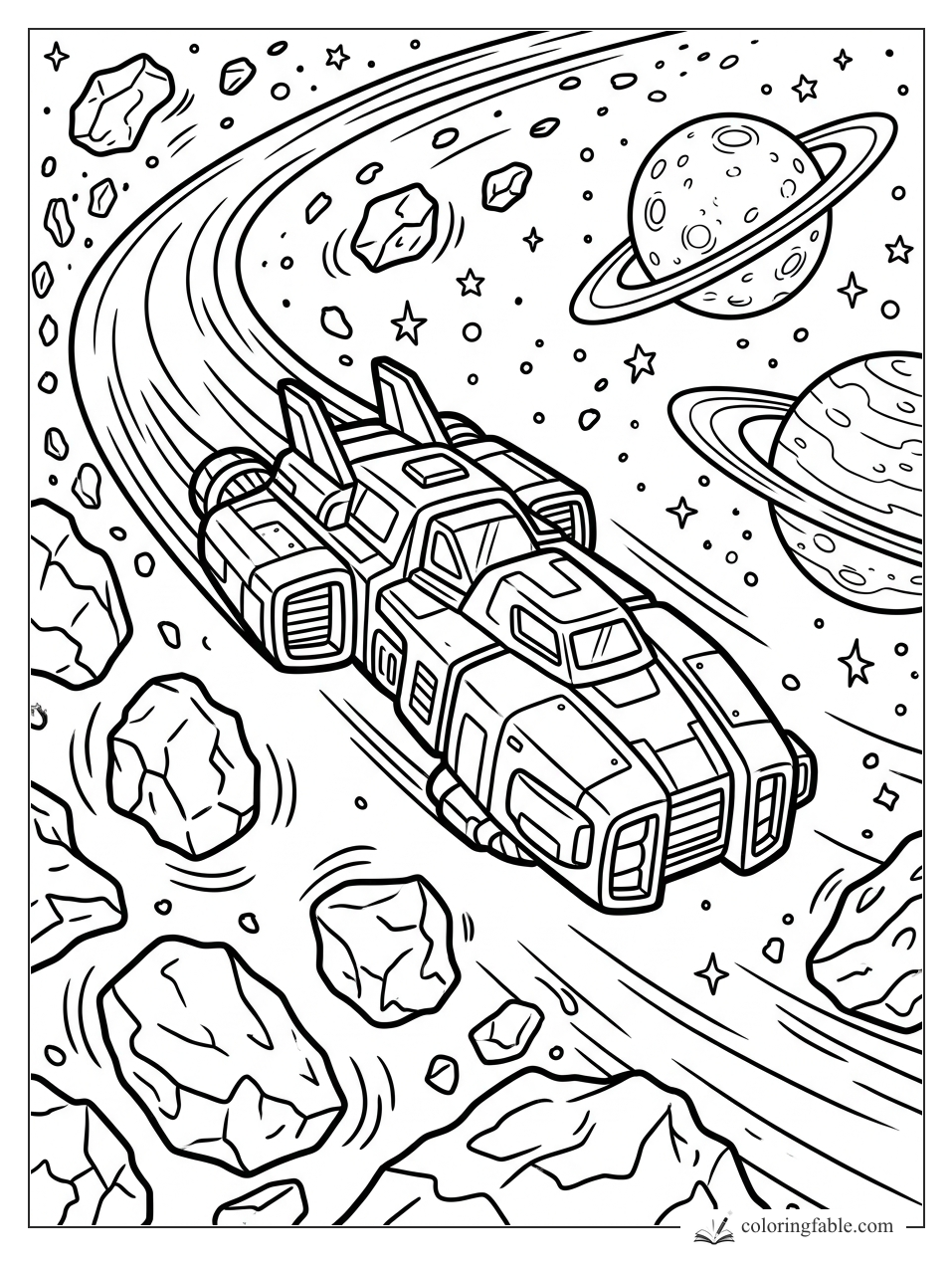
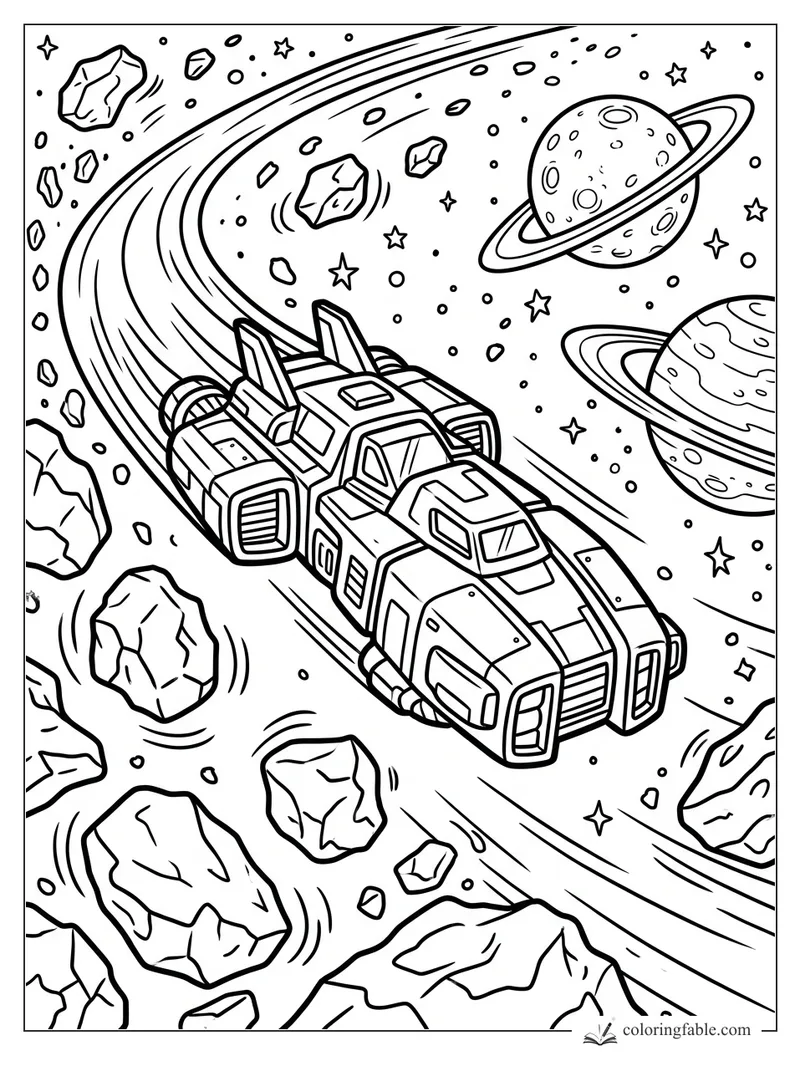
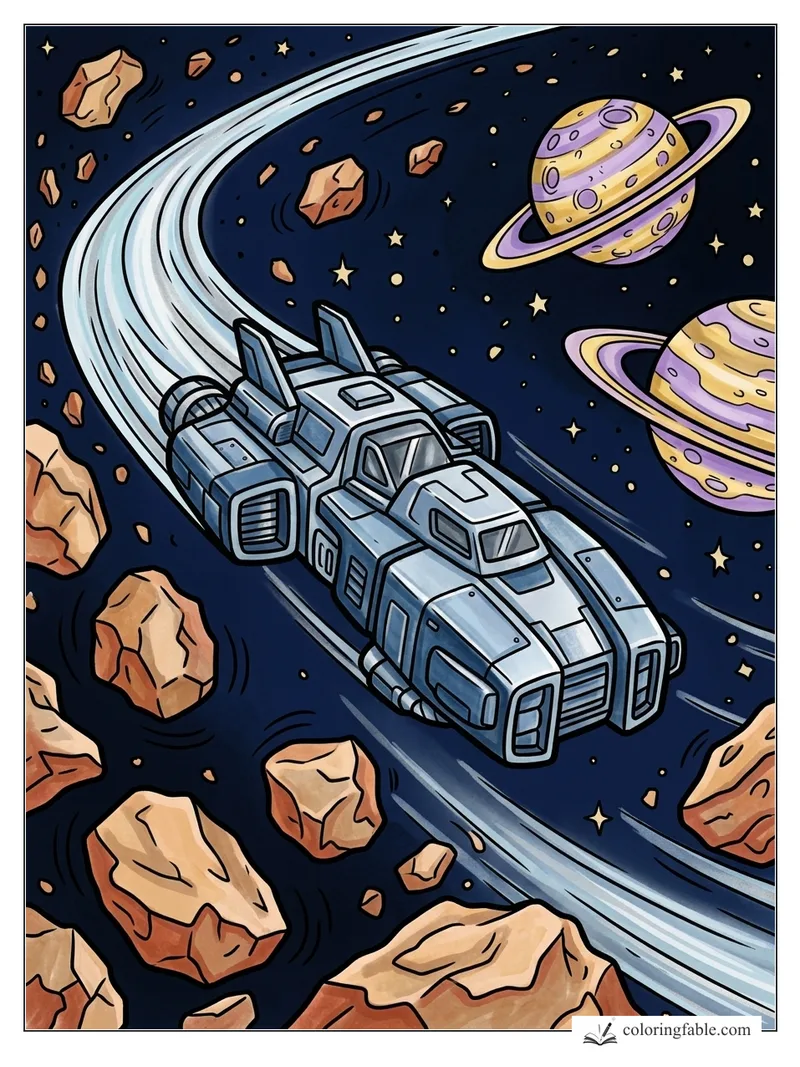
The quickest way through the Gravel Belt was supposed to be straight. Orin pressed both thumbs to the starship’s warm controls and aimed between the tumbling rocks, while dust ticked against the hull like dry peas in a tin cup. His delivery box hummed behind him, full of sleepy moon-moths that had to reach the dark side of Vesta before sunrise.
Then something impossible drifted into his path: a tiny old machine no bigger than a lunchbox, polishing a stone with a silver brush. It did not beep or flash. It simply made one slow circle in the dust. Orin waited. The asteroids waited too, creaking and turning, until the machine’s circle became a glowing curve.
“Shortcut?” Orin whispered.
The curve opened like a ribbon road. He followed it, not straight, but smooth, around every rock and past two ringed worlds. The moon-moths arrived just as Vesta’s first blue shadow fell. Ever since, asteroids leave curves for patient pilots—and if you trace the longest one here, you might find Orin’s shortcut home.