The Tune That Took Turns — After lunch, the practice room smelled like pencil shavings and cello rosin, and Bram tapped one sneaker against the floor. Read the full story →
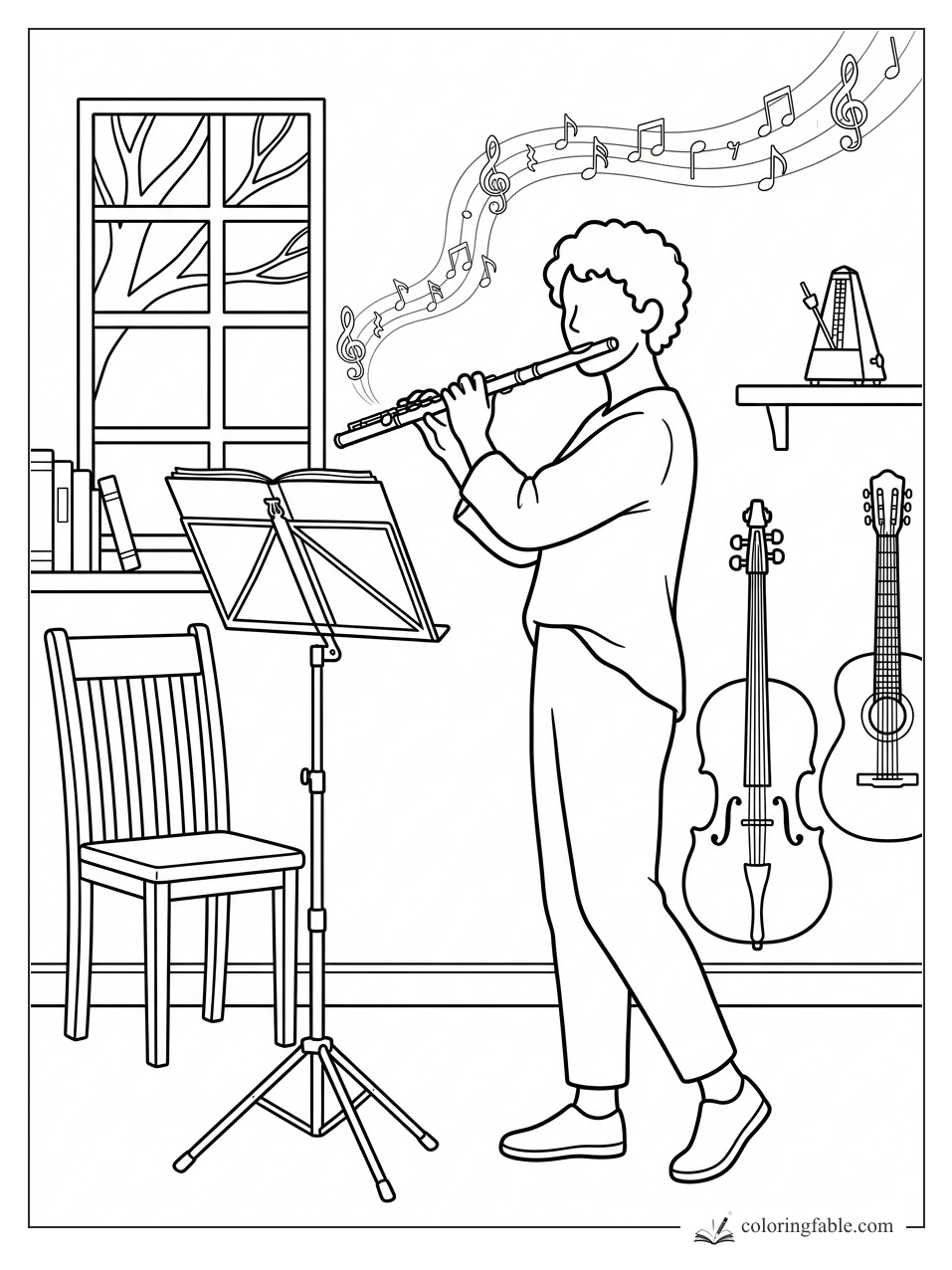
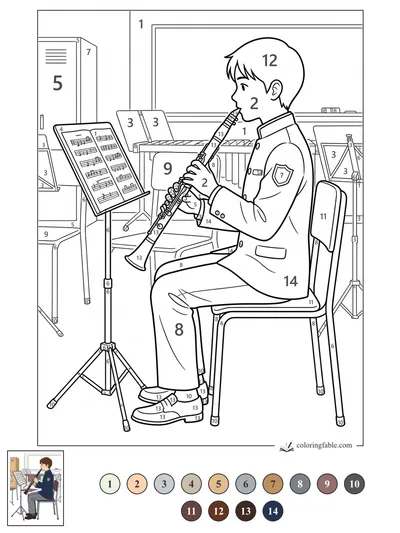
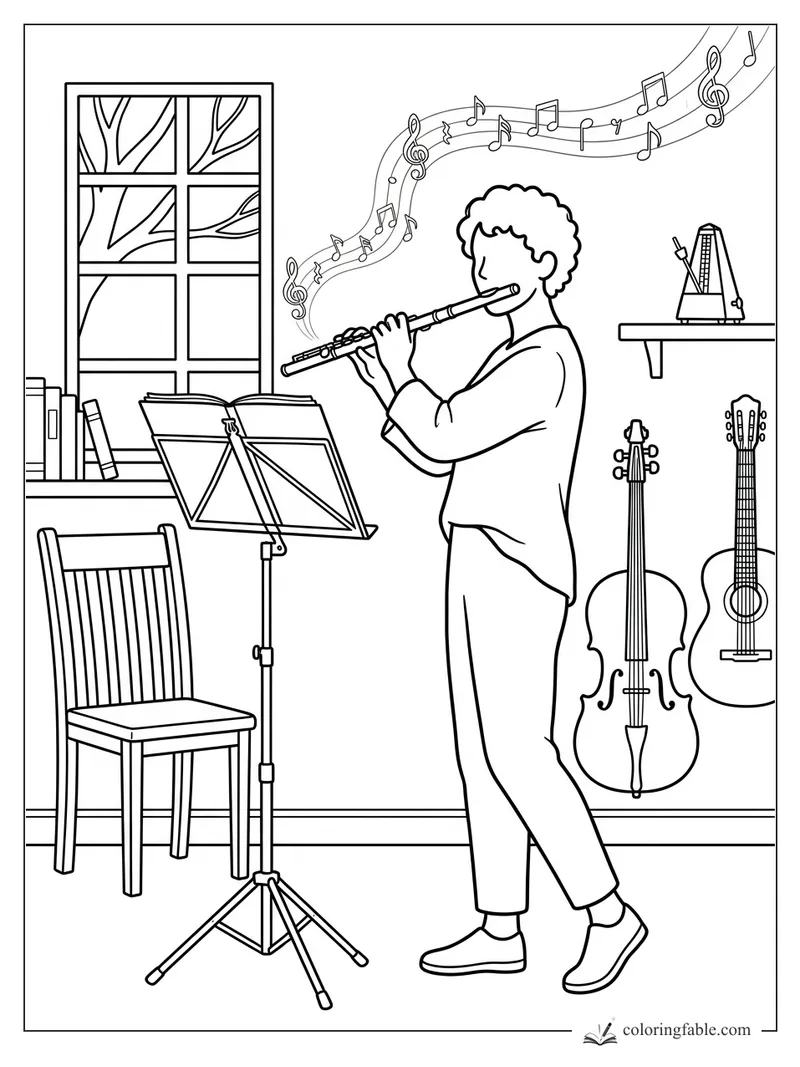
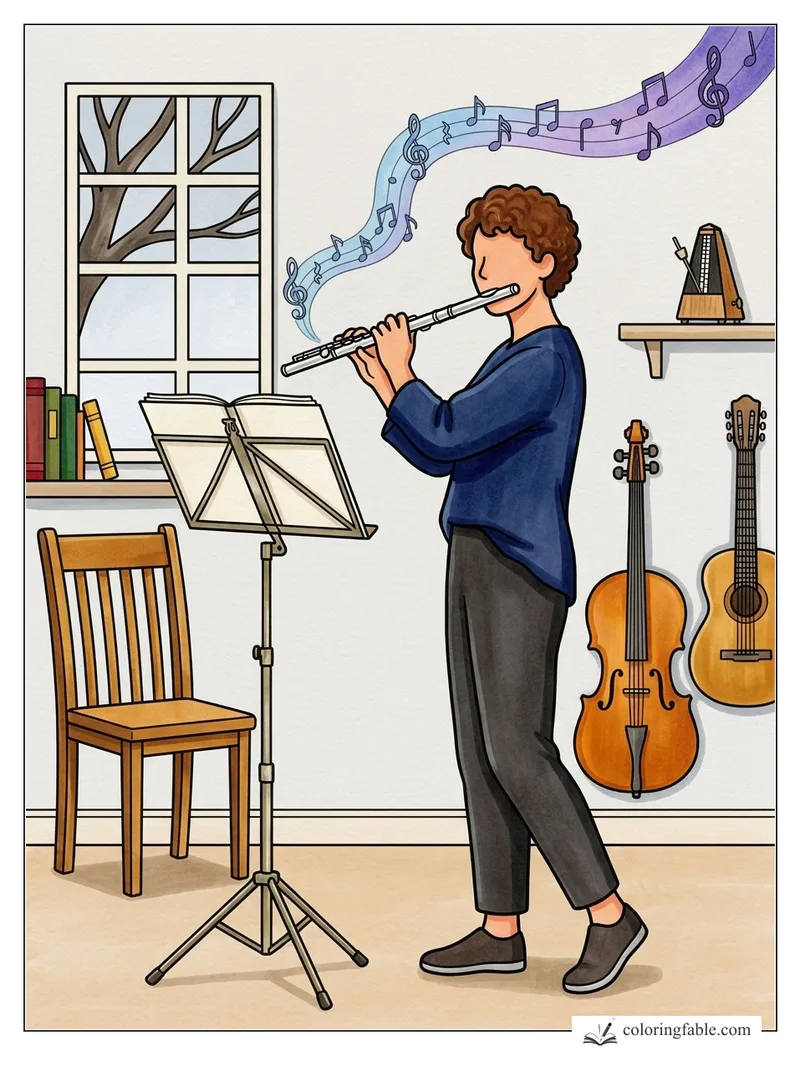
After lunch, the practice room smelled like pencil shavings and cello rosin, and Bram tapped one sneaker against the floor. He had invented a game called Wait-for-It: play one note, count five silent ticks, then play the next note without giggling. The music stand held his song like a folded map. Tick, tick, tick went the metronome on the shelf. Bram played a low D, waited, then played an E. The waiting felt longer than a Monday spelling test.
He made the game harder. One note for the window, one for the empty chair, one for the guitar leaning like it had heard a joke. Each time he paused, the room answered with tiny noises: a string creaked, the floor gave a soft pop, leaves scratched the glass. Bram puffed his cheeks to keep from laughing. “Your turn, chair,” he whispered, and counted five more ticks.
Then the twist came on the quietest pause. The metronome was not just ticking; it was making a secret rhythm between his notes—tick-tock, tick-tick, tock—as if it had been playing Wait-for-It from the start. Bram grinned and gave it space. His flute slipped in after every little tick, patient as a cat at a mouse hole. If you follow the curling notes above him, you might catch the metronome taking its turn.