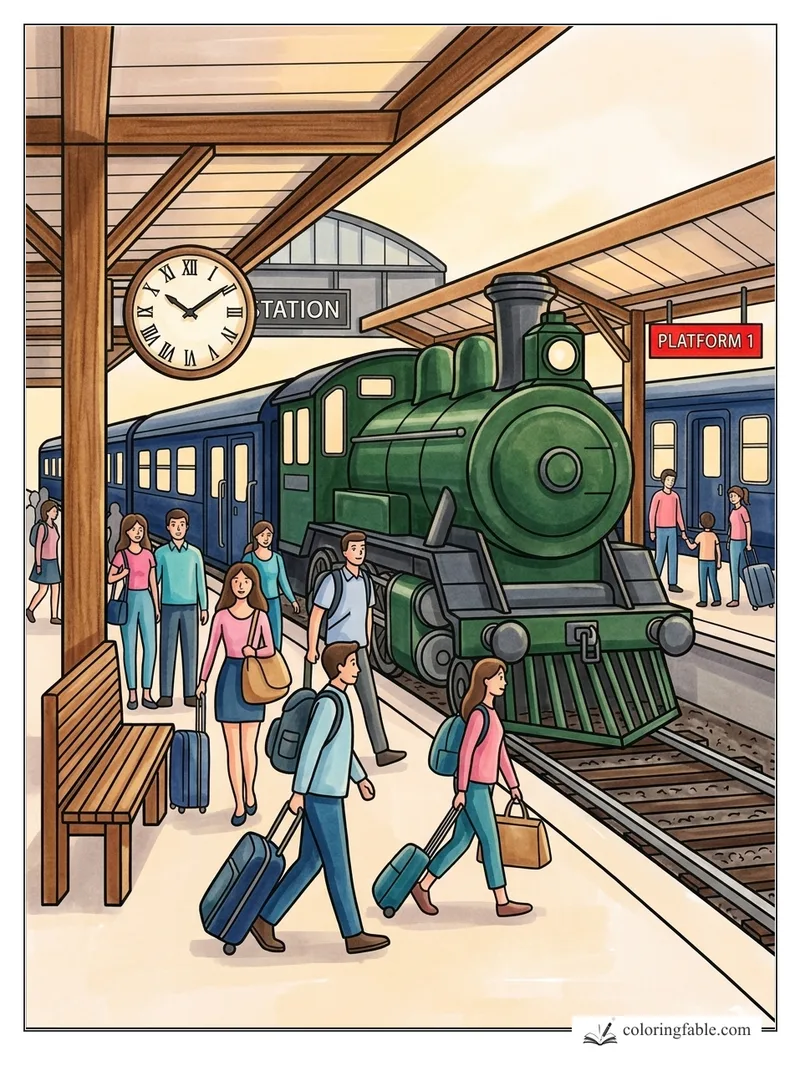
Why Station Clocks Point — Under the glass roof, Vera rolled her blue suitcase in tiny bumps—clack, clack, clack—and invented a game called Which Way Next. Read the full story →
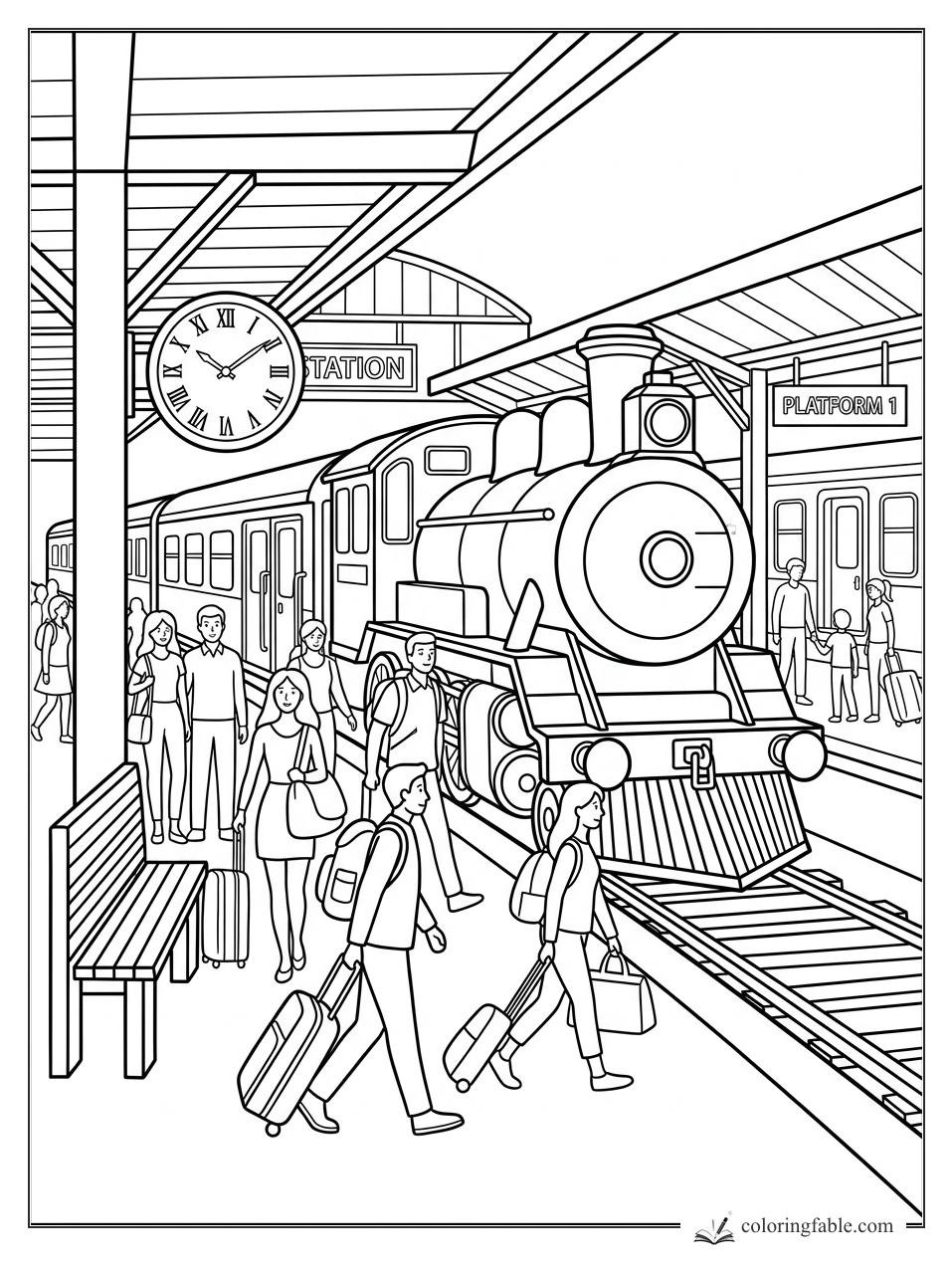
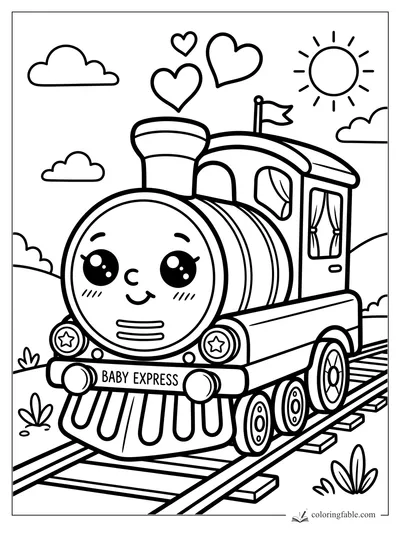
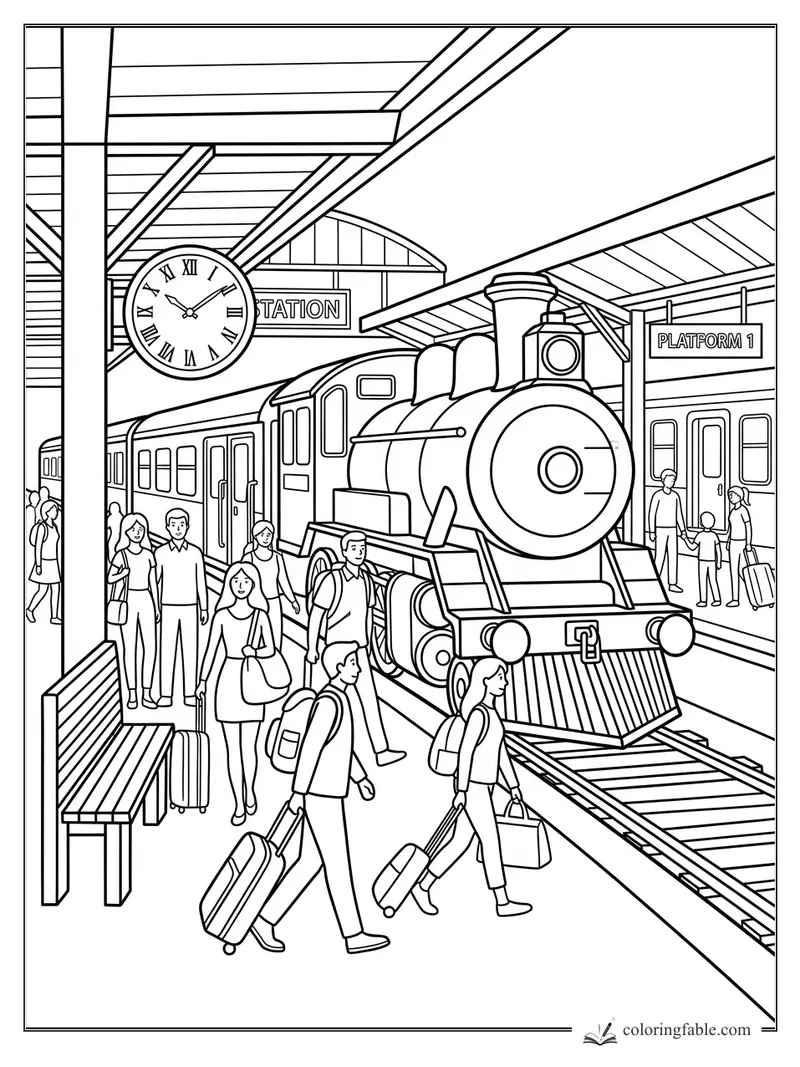
Under the glass roof, Vera rolled her blue suitcase in tiny bumps—clack, clack, clack—and invented a game called Which Way Next. She would choose one traveler, guess their train by their shoes, then follow only the clues she could hear: a paper ticket snap, a trunk wheel squeak, the soft huff of the engine resting at Platform 1. She wanted to guess before the conductor lifted his flag, but the station was full of crossings and coats and echoing footsteps.
Then the great round clock above the walkway gave a small shiver. Its hands, which had always looked plain to Vera, stretched into two neat arrows. The long one aimed toward the train’s bright headlamp; the short one pointed toward the family with three striped bags. “That way,” Vera whispered. She followed the arrows through the warm coal smell and found the family just as the youngest child dropped his ticket between the boards.
Ever since, station clocks have kept arrow hands, not just to tell time, but to point curious travelers toward the next right thing. Next time you spot the clock over Platform 1, see if its arrows are quietly playing Which Way Next.