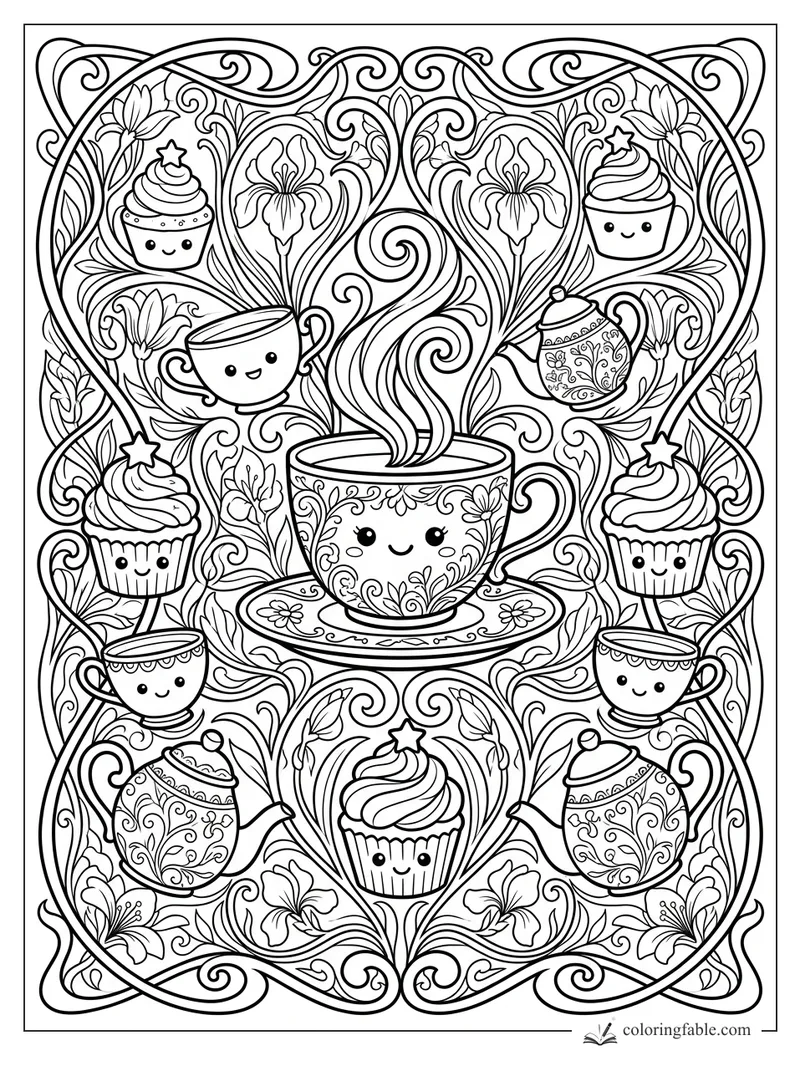
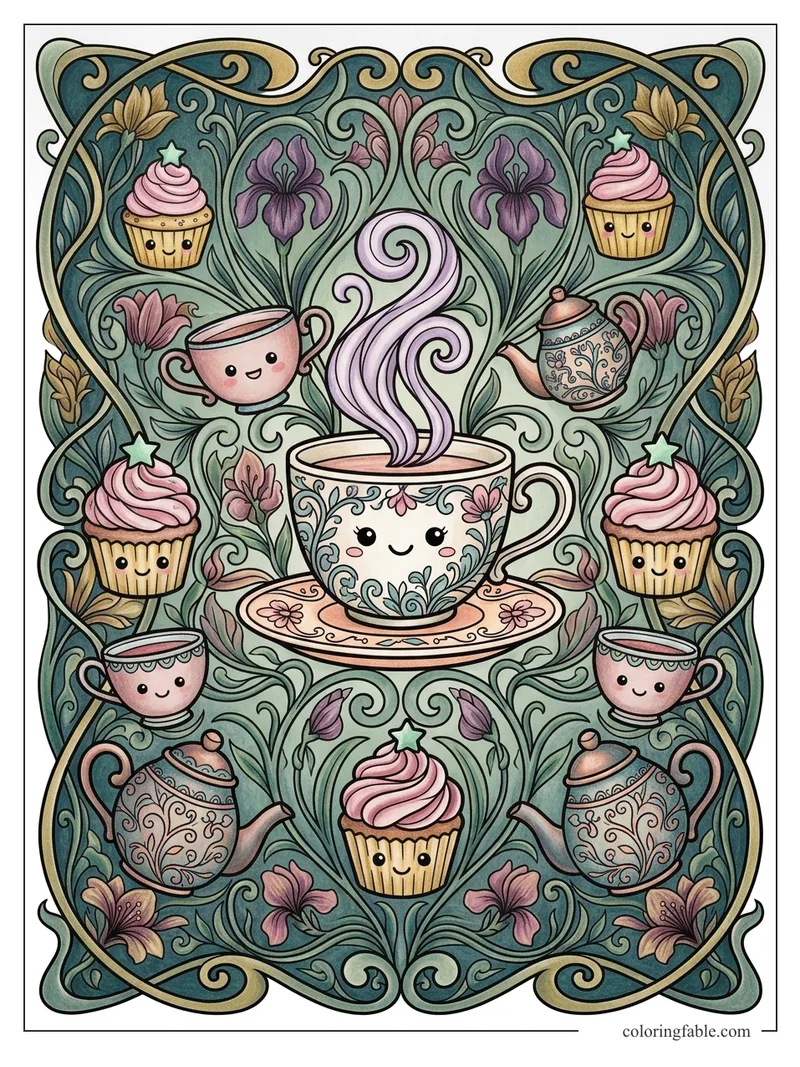
Why Teacups Hold Steam — Before the salon lamps were lit, Elara carried the chipped tasting spoon in her sleeve and crossed the tiled hush between sleeping kettles. Read the full story →
Before the salon lamps were lit, Elara carried the chipped tasting spoon in her sleeve and crossed the tiled hush between sleeping kettles. She wanted to paint one first cup for the evening table, just once before the guests arrived, but the great samovar breathed too loudly, and every porcelain face seemed to wait. The spoon was plain silver, bent at the lip where her mother had tapped it against winter cups; in Elara’s palm it smelled faintly of bergamot and sugar.
She dipped it into the first steeping and the tea gave a small, startled sigh. Up rose a ribbon of warmth, not smoke and not cloud, but something listening. Elara touched her brush to the cup’s bare curve, and the ribbon bent nearer, hiding her shaking hand from the rows of bright-eyed saucers. “Stay,” she whispered. The steam curled once around the painted flower, once around the chipped spoon, and settled like a soft guard over the cup.
By evening, every cup in the vine-walled salon wore its own little shelter of warmth. Ever since, teacups keep their steam close, because the first brave cup-painter asked warmth to stay before the lamps were lit.