Why Speed Lines Follow Cars — At the edge of the salt flats, where the wind hissed like soda through a straw, a young sign-maker named Calder gave himself a private dare: build one marker that could be seen by the fastest car in town. Read the full story →
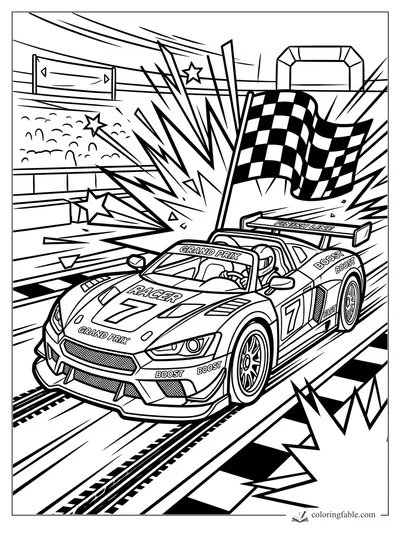
At the edge of the salt flats, where the wind hissed like soda through a straw, a young sign-maker named Calder gave himself a private dare: build one marker that could be seen by the fastest car in town. No store-bought paint. No printed arrows. Just his own hands, a brush with stiff bristles, and a jar of blue so bright it made his fingertips look like sky.
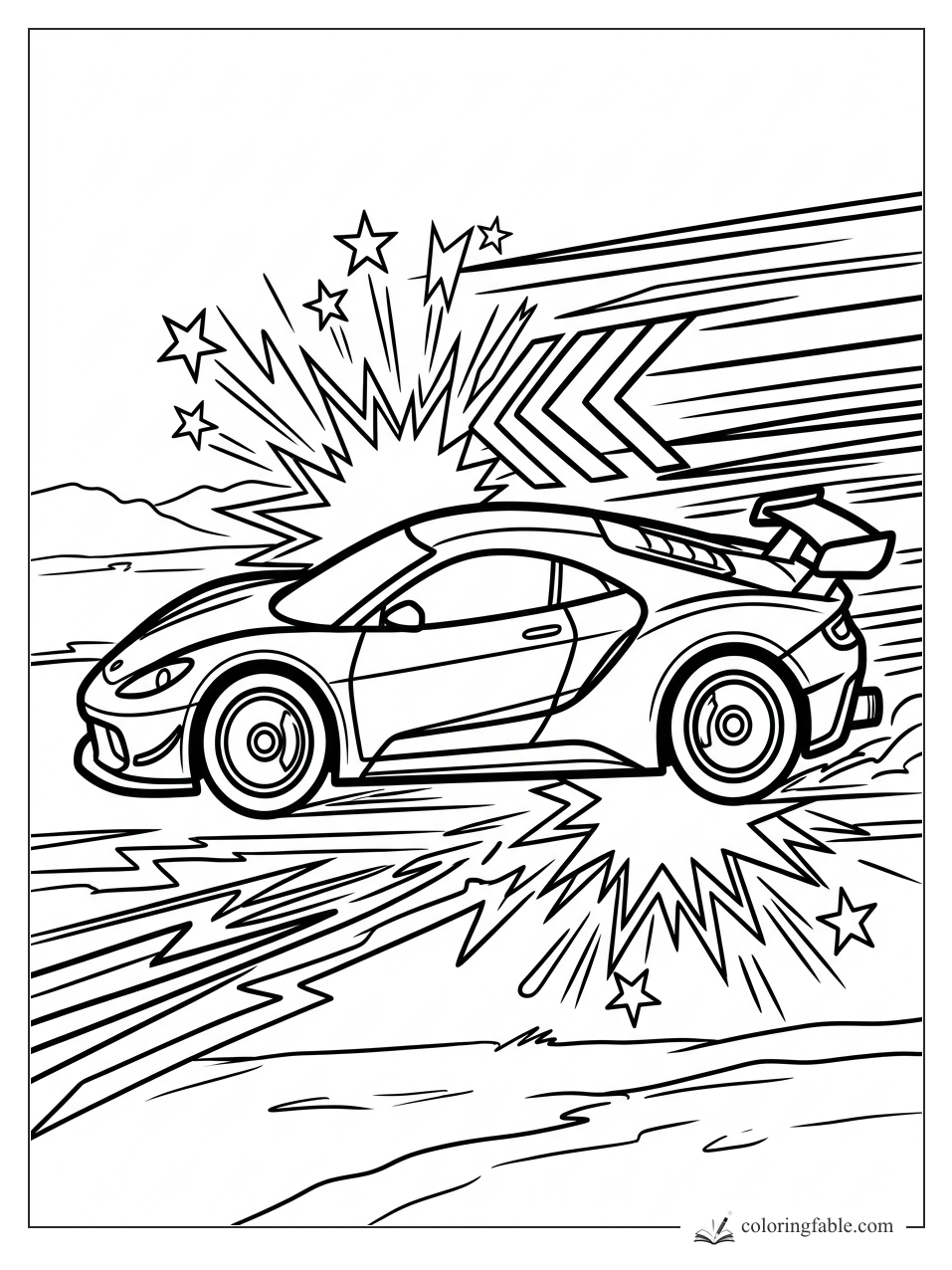
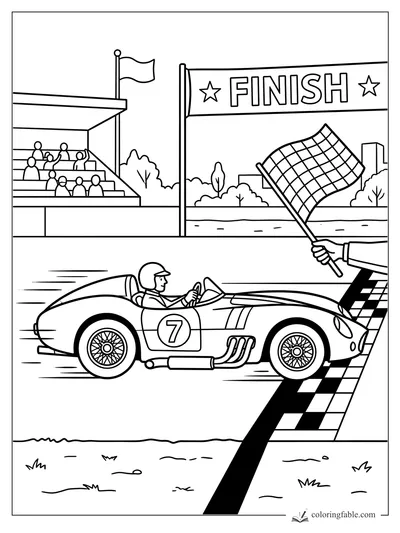
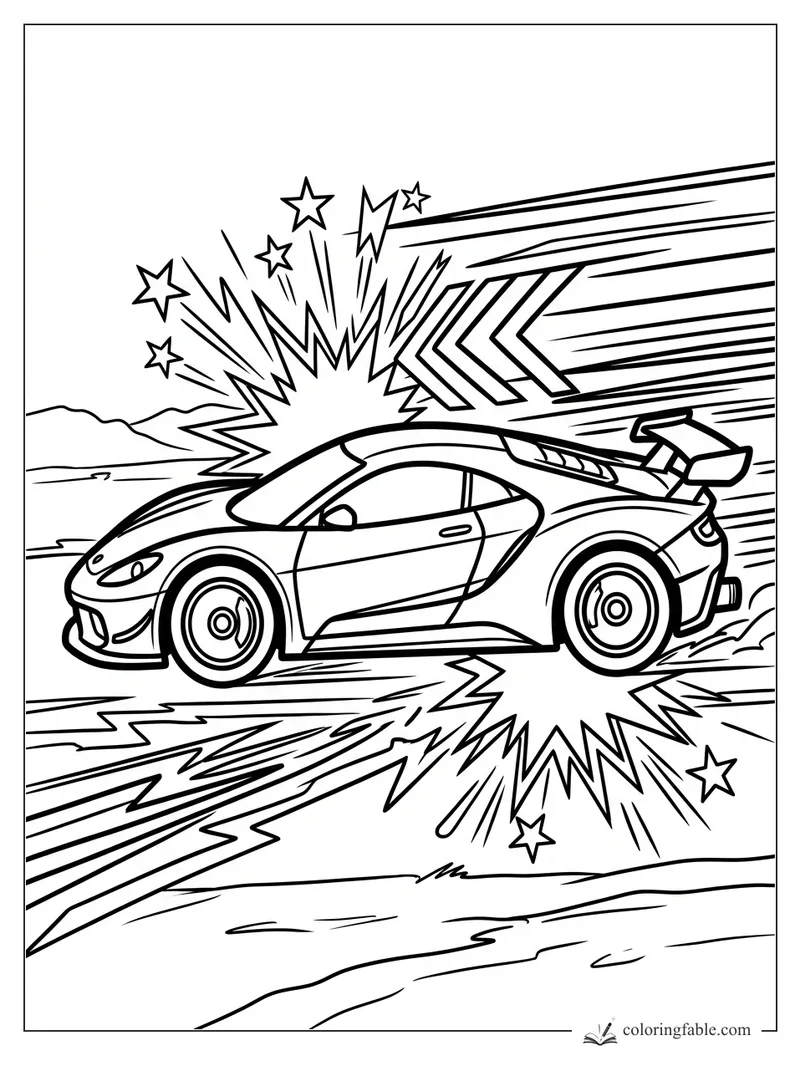
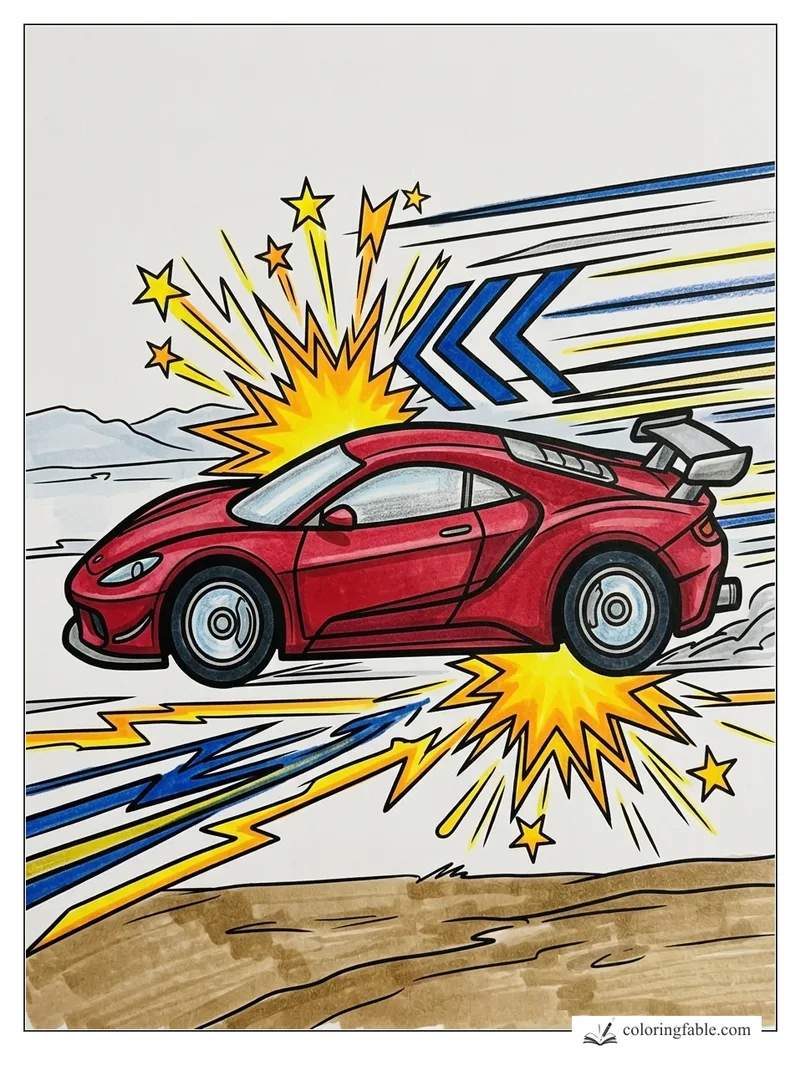
The trouble was the flats swallowed signs. A plain arrow looked tiny. A tall flag snapped in two. So Calder cut cardboard into jagged bolts, stars, and thick chevrons, then painted long black streaks behind them. When Zev, the silver racer, roared past to test it, the dry paint peeled off in skinny ribbons—ffffft!—and streamed after him like the road was shouting, “This way!” Calder’s chest went warm under his dusty shirt. He had made the wind readable.
Here’s the secret: the racers kept those streaks. Ever since Calder’s dare, fast cars have carried speed lines behind them, especially when the salt flats smell sharp and bright after noon. Next time you spot the jagged bolts and stars, see if you can tell which lines Calder painted first.