Why Mazes Keep Centers — By the third bell, every hallway in the Pattern Hall was supposed to point somewhere. Read the full story →
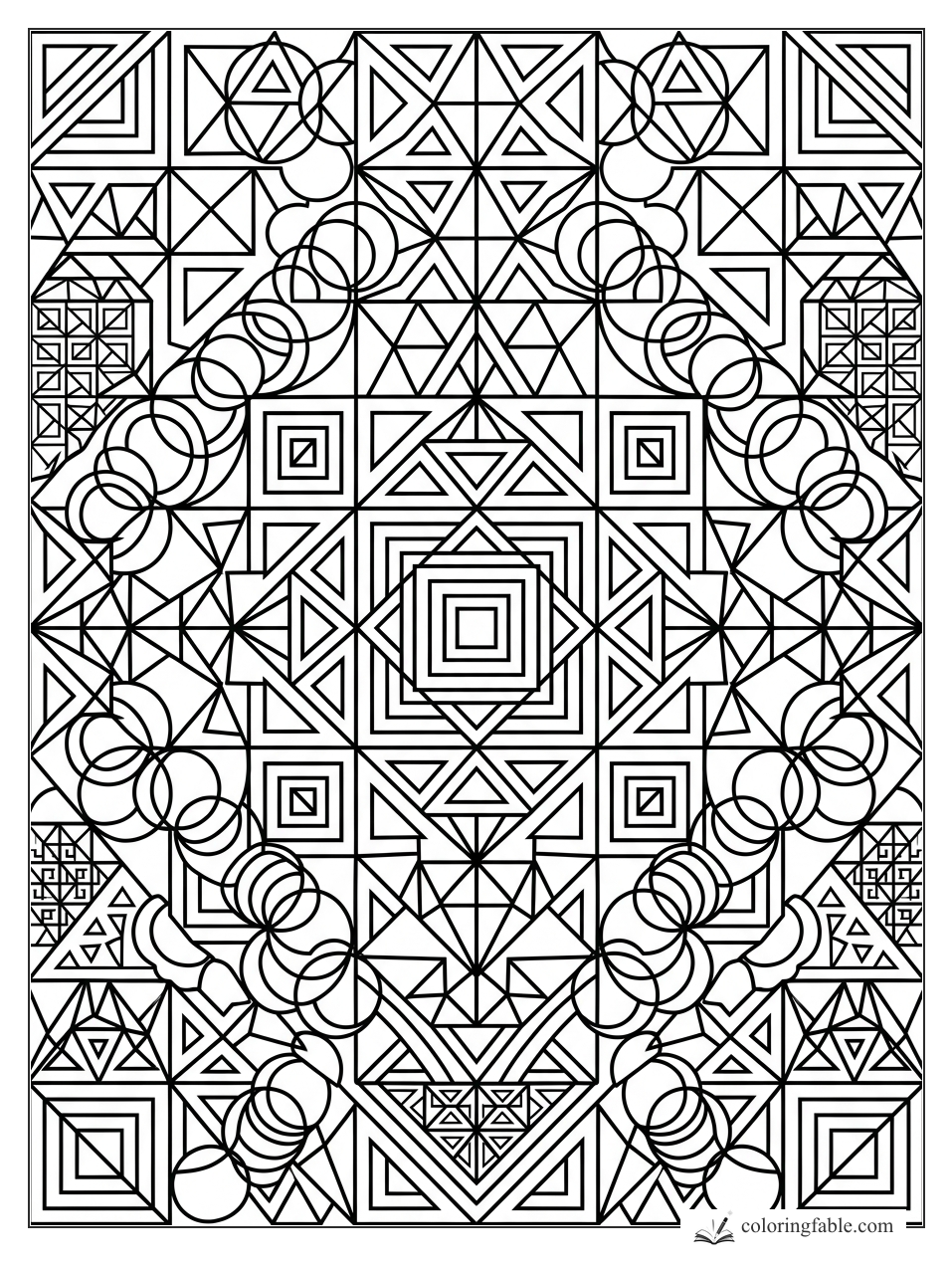
By the third bell, every hallway in the Pattern Hall was supposed to point somewhere. Quill carried a chalk nub and marked each triangle door he passed, trying to find the first hallway that led nowhere. The floors smelled like rain on stone, and every step made a tiny click-click, as if the tiles were whispering behind his shoes.
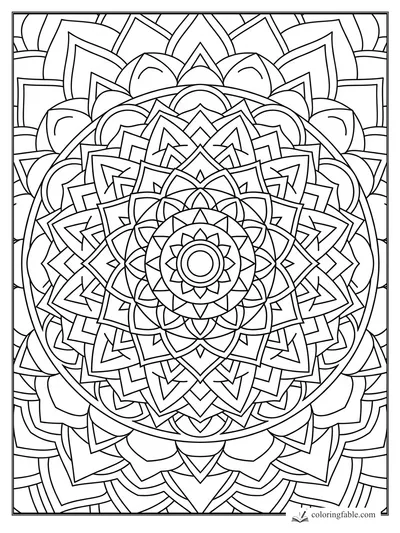
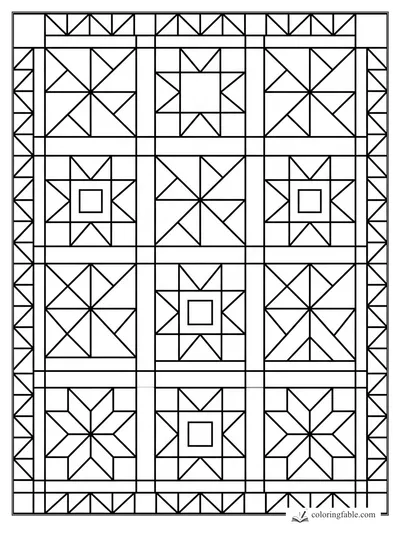
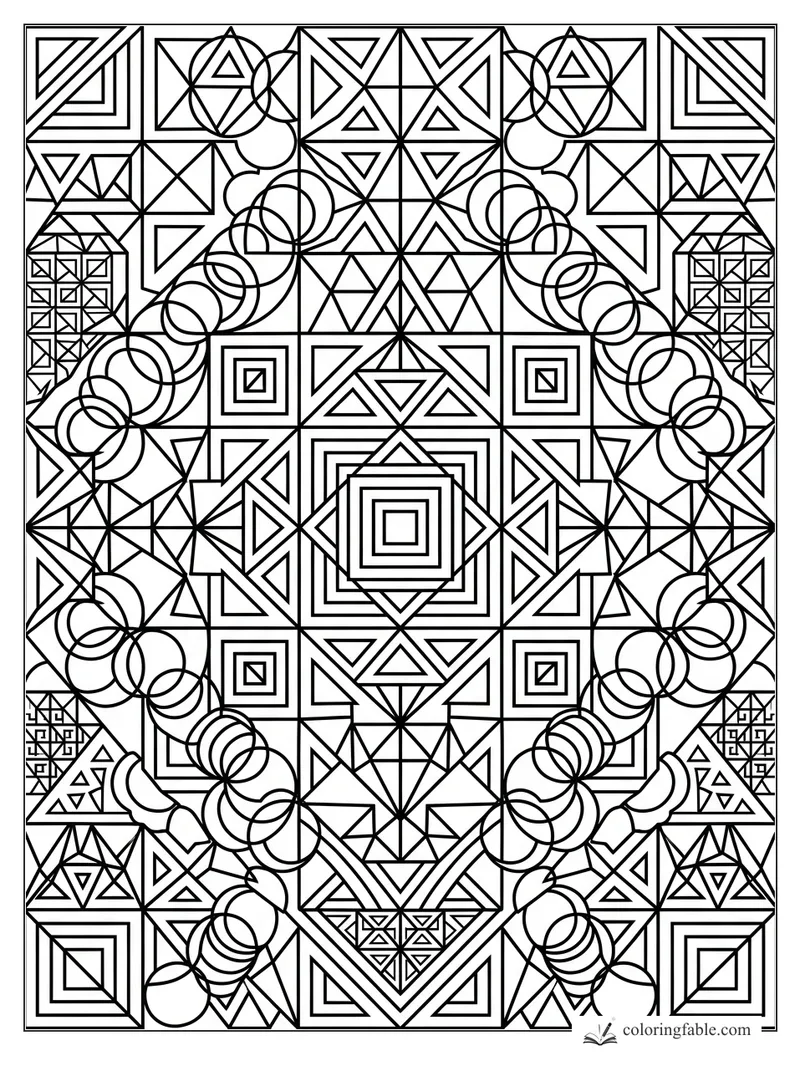
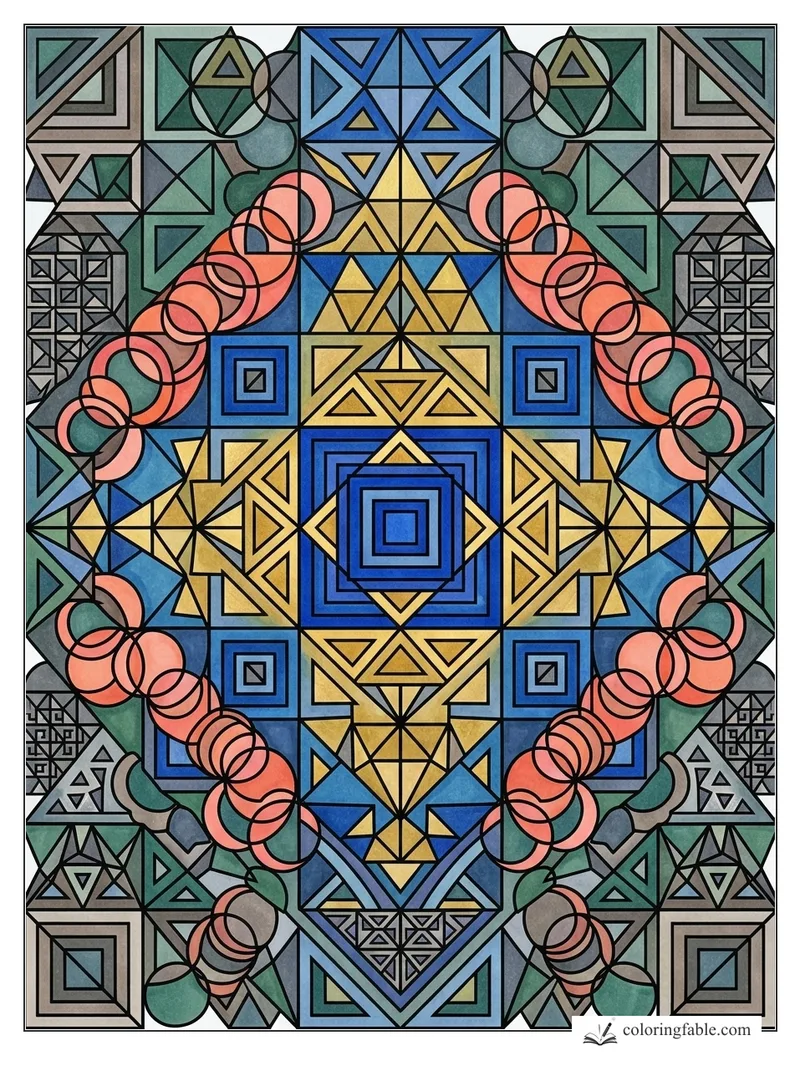
Then a stranger made of overlapping rings rolled out from a corner that had not been there a breath before. “Don’t follow me,” it sang, which, between us, is exactly what a curious person hears as “follow quickly.” Quill chased it past square-within-square windows, through rows of sharp black angles, and under arches of circles that brushed his sleeves like cool bracelets.
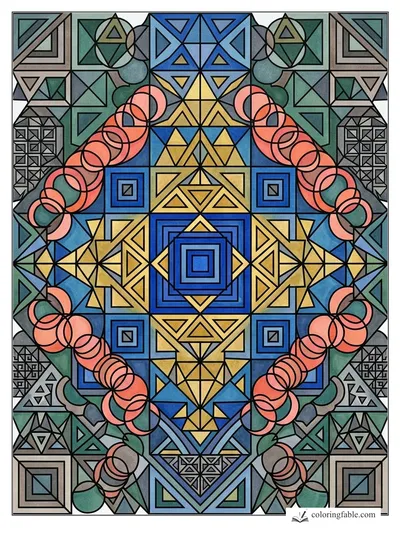
At last the ring-stranger stopped at the one silent square in the middle. It pressed its circles flat, and the whole hall shivered into balance: triangles aimed inward, squares nested tight, corners tucked their little mazes away. Ever since, every true maze keeps a center that does not move, so runaway curiosity has a place to catch its breath. If you trace the paths with your eyes, can you find where Quill stopped after the third bell?