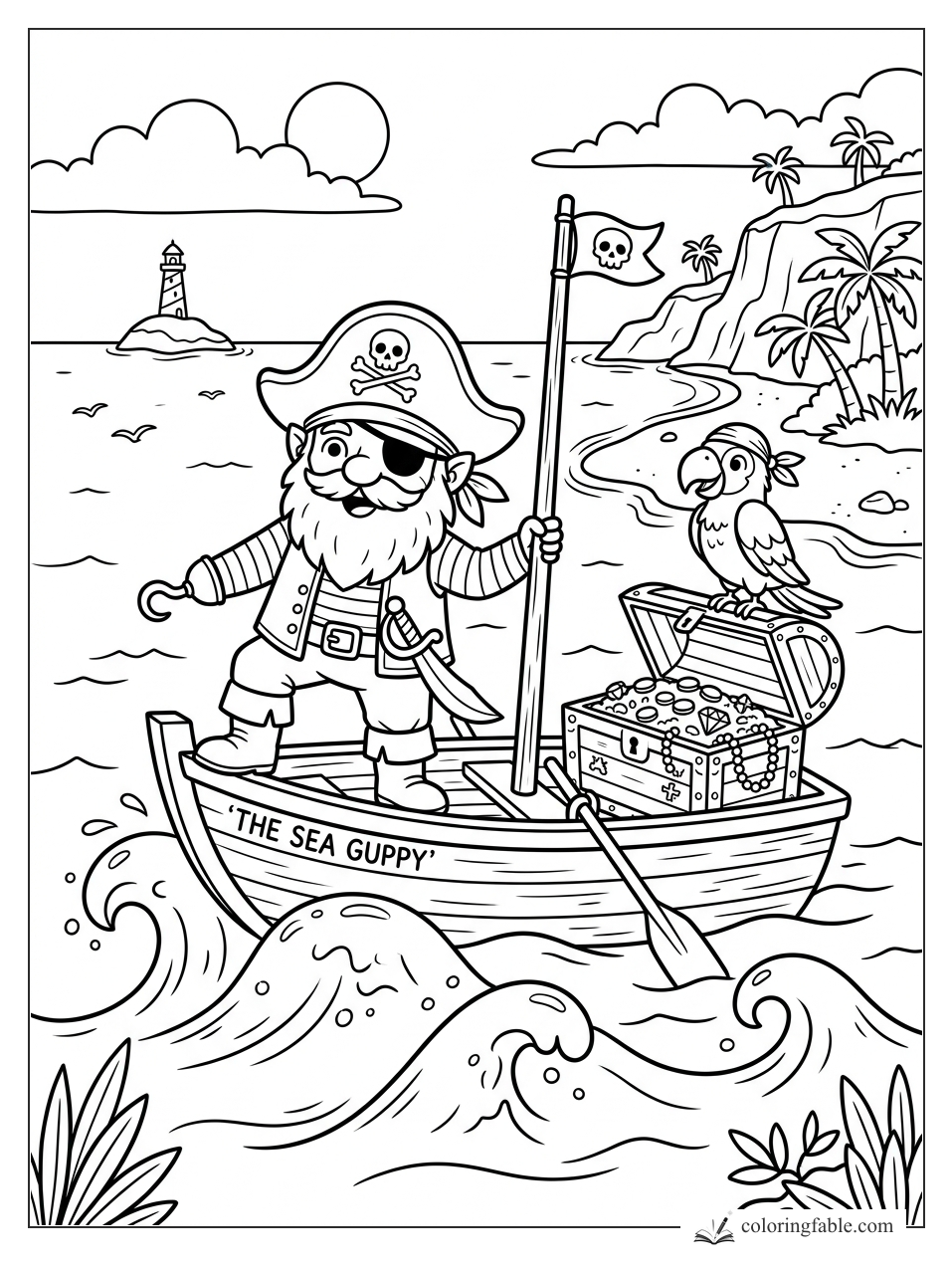
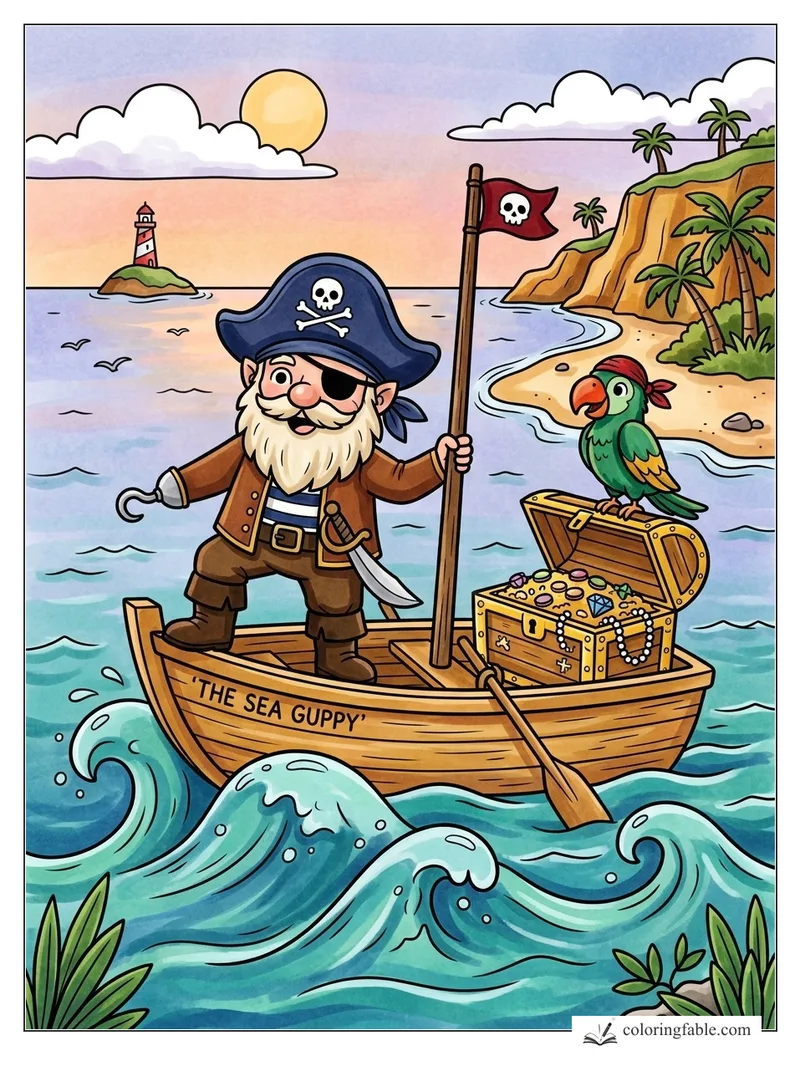
Orson’s Flagwind Game — At the end of the quiet dock, with tar smell warming in the sun, Orson tied a napkin to his oar and invented Flagwind. Read the full story →
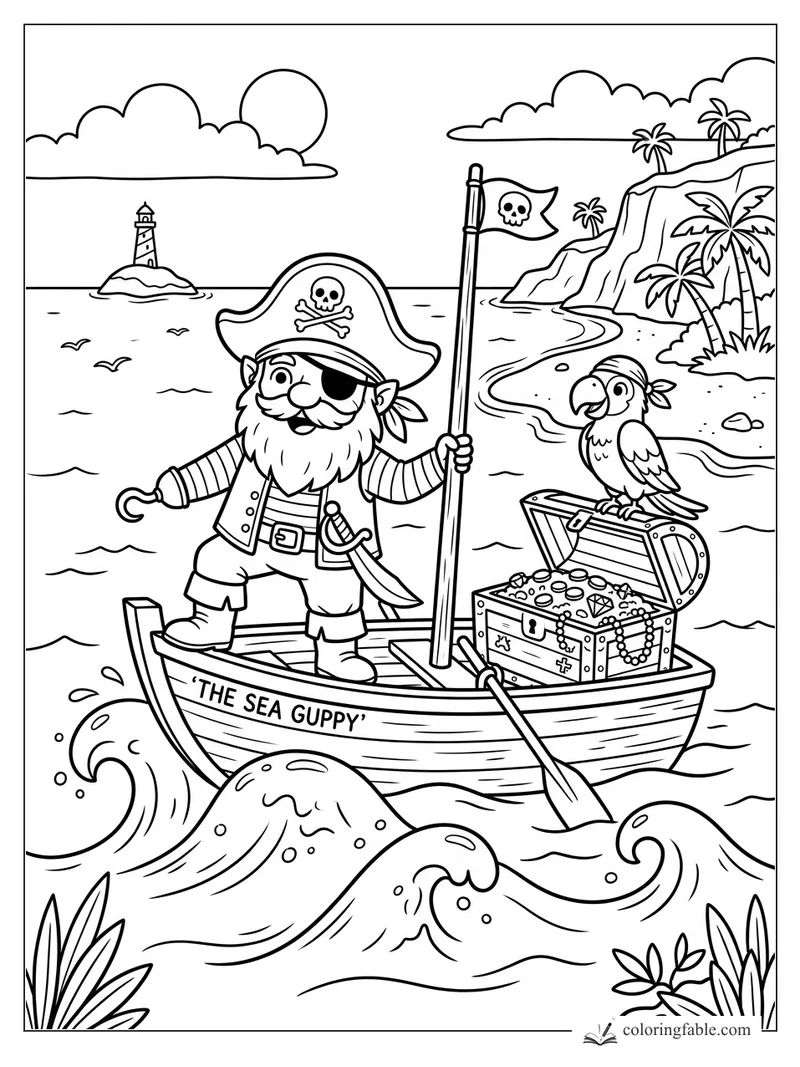
At the end of the quiet dock, with tar smell warming in the sun, Orson tied a napkin to his oar and invented Flagwind. The rule was simple: whichever way the cloth snapped, he had to follow until it pointed to something curious. He wanted one perfect gust from beyond Palm Cove, the kind that made gulls tilt and ropes hum. “Just one round,” he told his parrot, Kettle, who clicked his beak like pebbles in a jar.
The first breeze tugged them past the safe rope buoy. The second sent them around a foamy bend where the water slapped cold spray over Orson’s boots. The price of playing was his best striped sock, snatched by a little wave and carried off like a tiny sea snake. Then the napkin lifted straight toward the old lighthouse island, where the air smelled of salt and rain. On the shore, a tired flag hung tangled on a splintered pole, hiding the lamp keeper’s signal.
Orson forgot the game and climbed out, knees sandy, beard full of mist. He untied the knot, raised the signal, and saw the lamp flash once, soft as a wink. Back home, he made a new rule: Flagwind was not for finding the wildest gust, but for noticing who was waving first. If you trace the flag’s pole and follow the sea breeze, can you tell where Orson’s next round begins, at the end of the quiet dock?