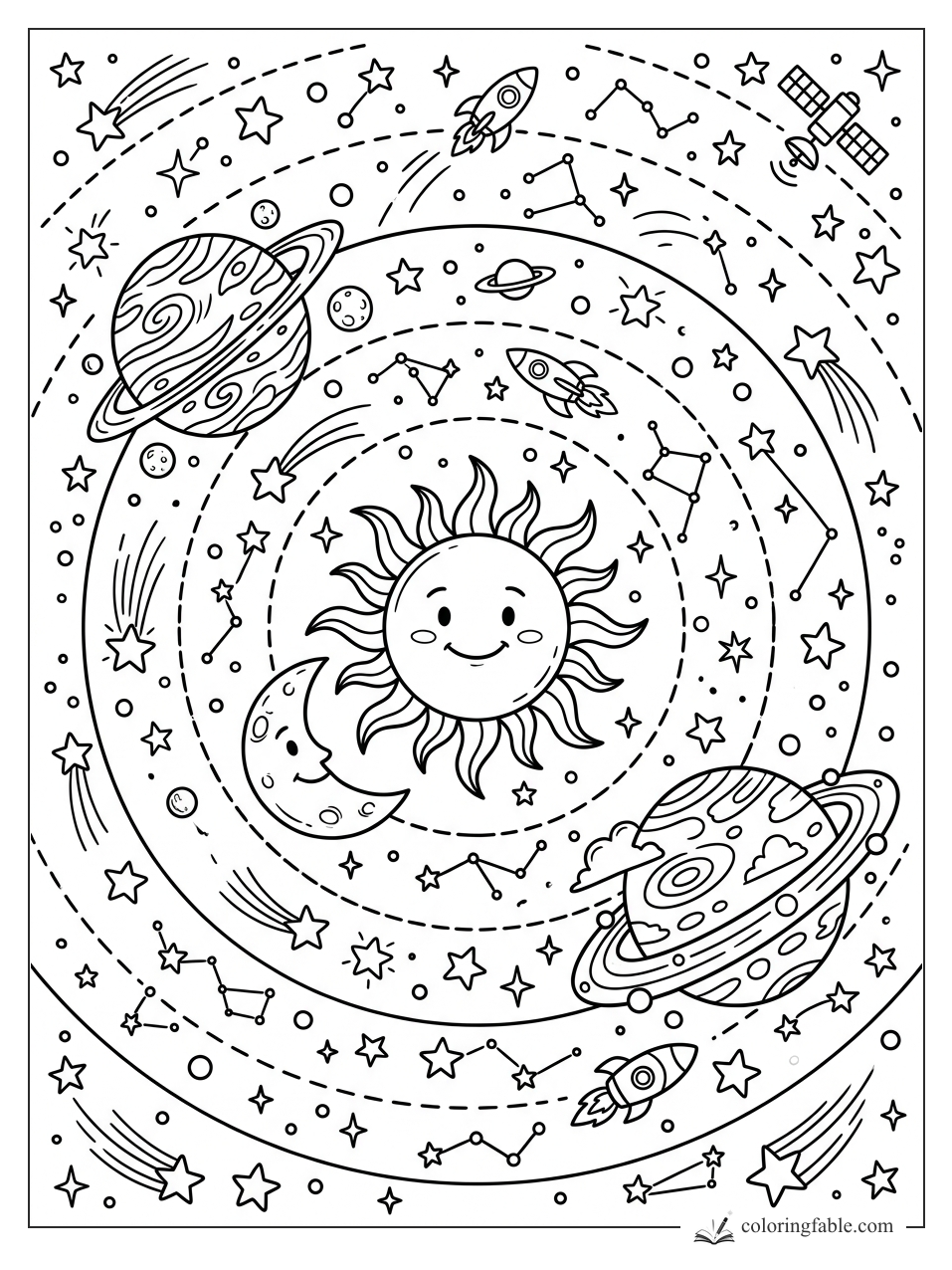
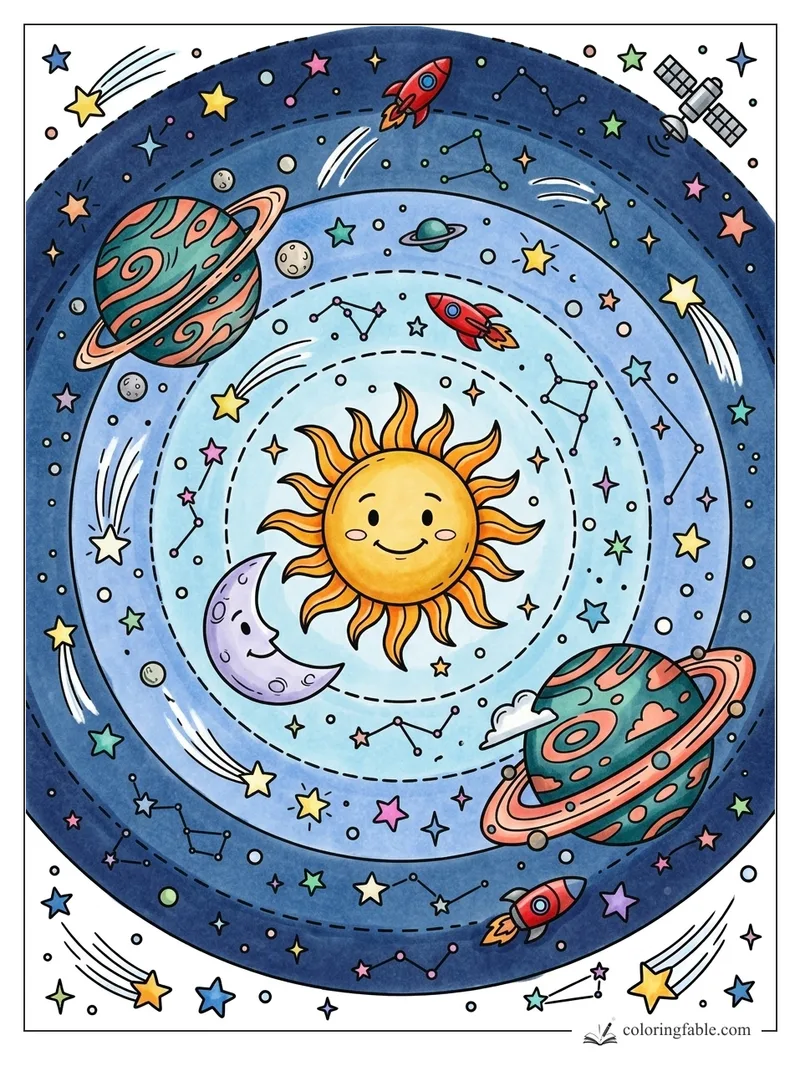
Why Orbits Wait Their Turn — Between the moon’s yawn and the sun’s first warm grin, Vela tucked a piece of comet chalk behind her ear and drew circles in the dark. Read the full story →
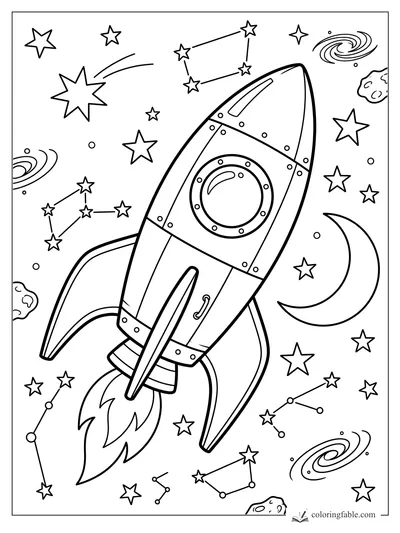
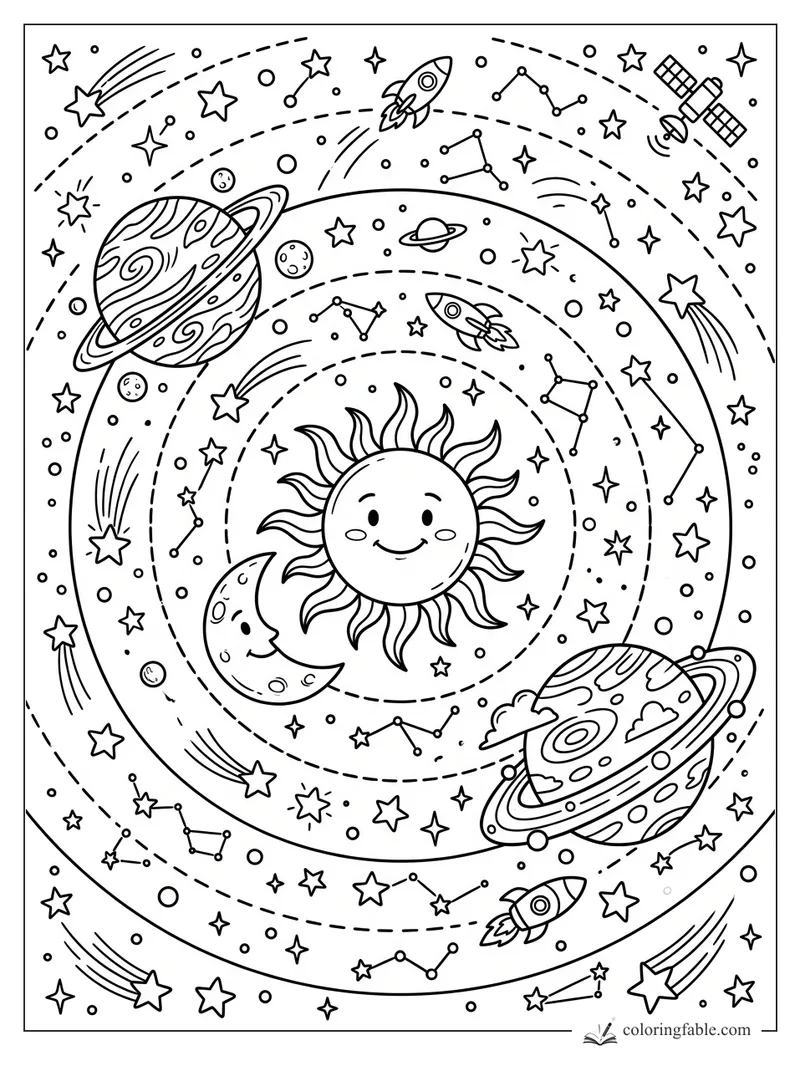
Between the moon’s yawn and the sun’s first warm grin, Vela tucked a piece of comet chalk behind her ear and drew circles in the dark. She wanted the rockets, stars, planets, and one clanky satellite to play her new game, Slow-Go-Glow, but nobody wanted to wait. Zoom! Hiss! Clink! A red rocket nearly singed Saturn’s ring, and three little stars spilled like salt across the sky.
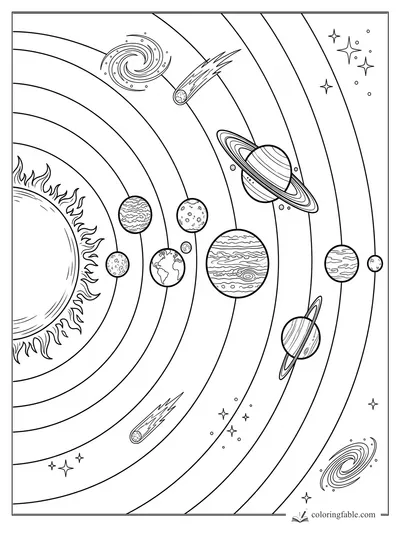
Here is the secret part: Vela did not scold them. She blew cool stardust from her palm and whispered, “Touch only your own line.” The chalk circles shivered, then held fast, smooth as ribbon and quiet as snow. One by one, the racers followed their paths. The rocket still zoomed, the satellite still clinked, and the stars still flashed, but no one crashed.
By morning, the sun smiled at the neat spirals and the moon tucked in close to watch. Ever since, sky things travel on patient paths called orbits, waiting their turn around the warm grin—can you spot who is still playing Slow-Go-Glow?