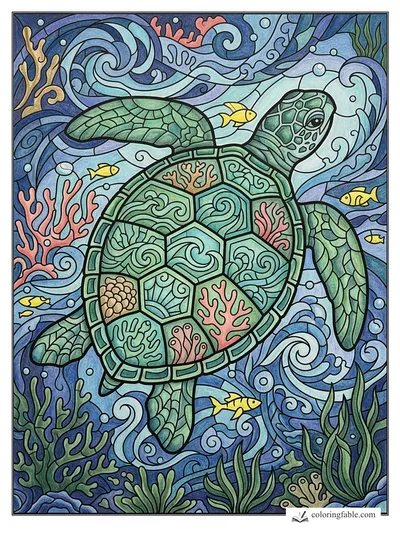
Why Shells Hold the Reef — The first night Veya crossed the mosaic reef, every current seemed to have a room of its own. Read the full story →
The first night Veya crossed the mosaic reef, every current seemed to have a room of its own. One smelled of rain on warm stone, one hummed like a conch, and one brushed her flippers with the softness of eelgrass. She wanted only a hollow that would fit her breathing, but the coral doors opened and closed with the tide, and none stayed hers.
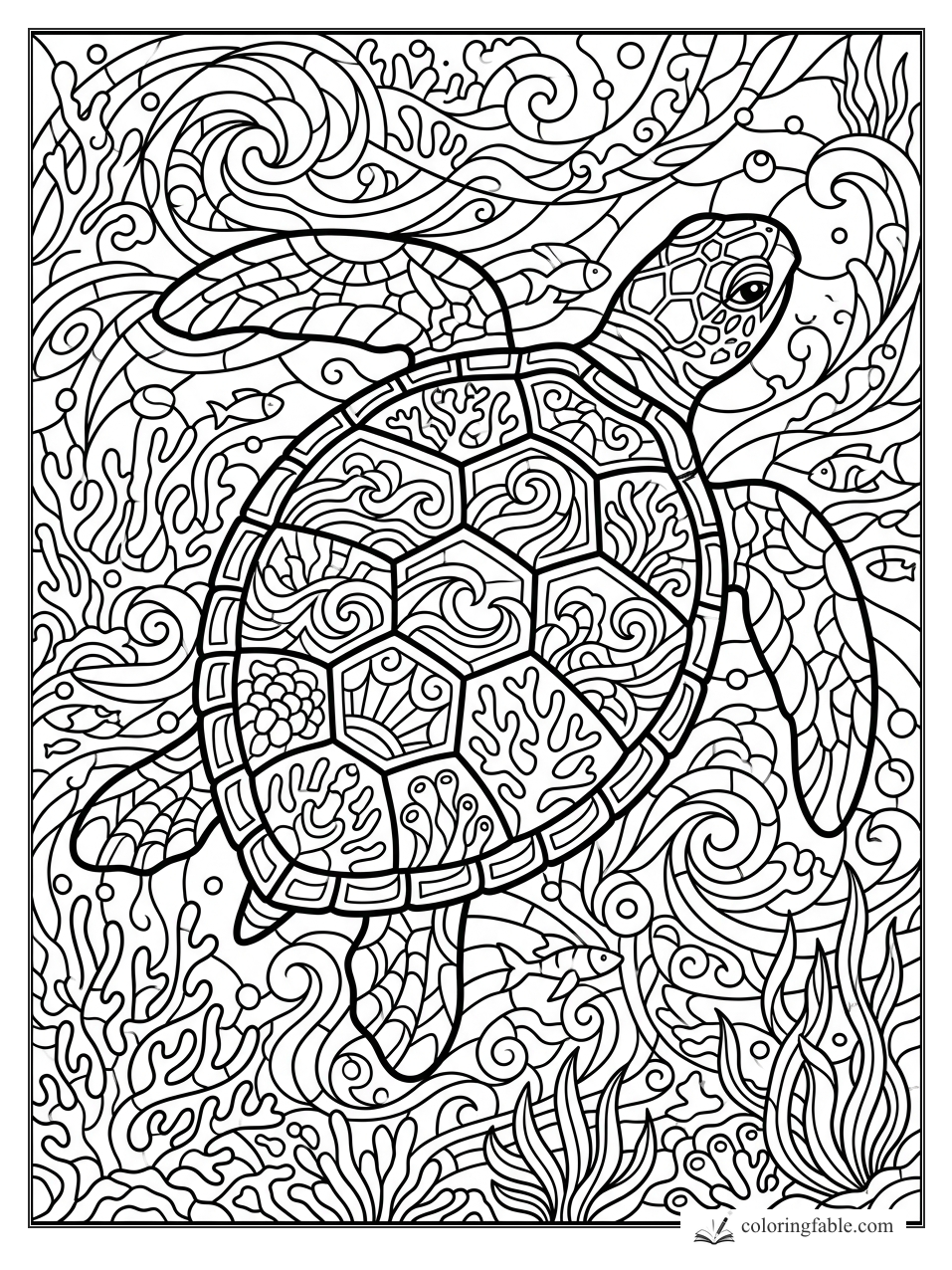
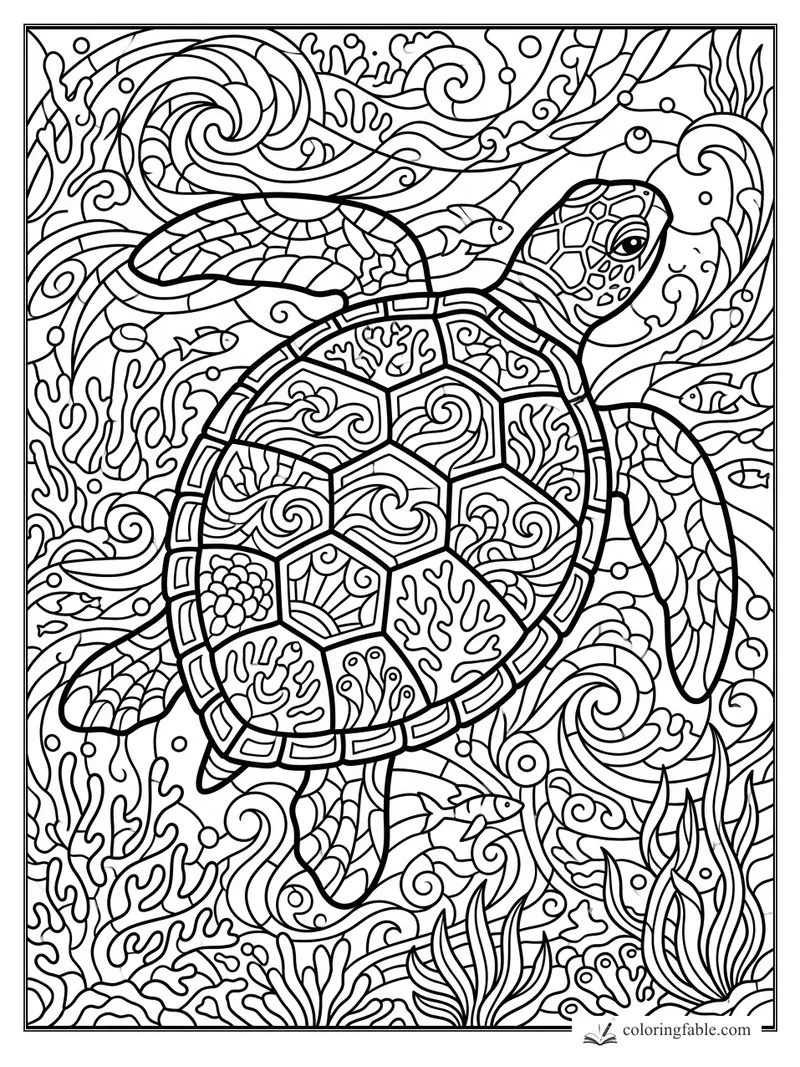
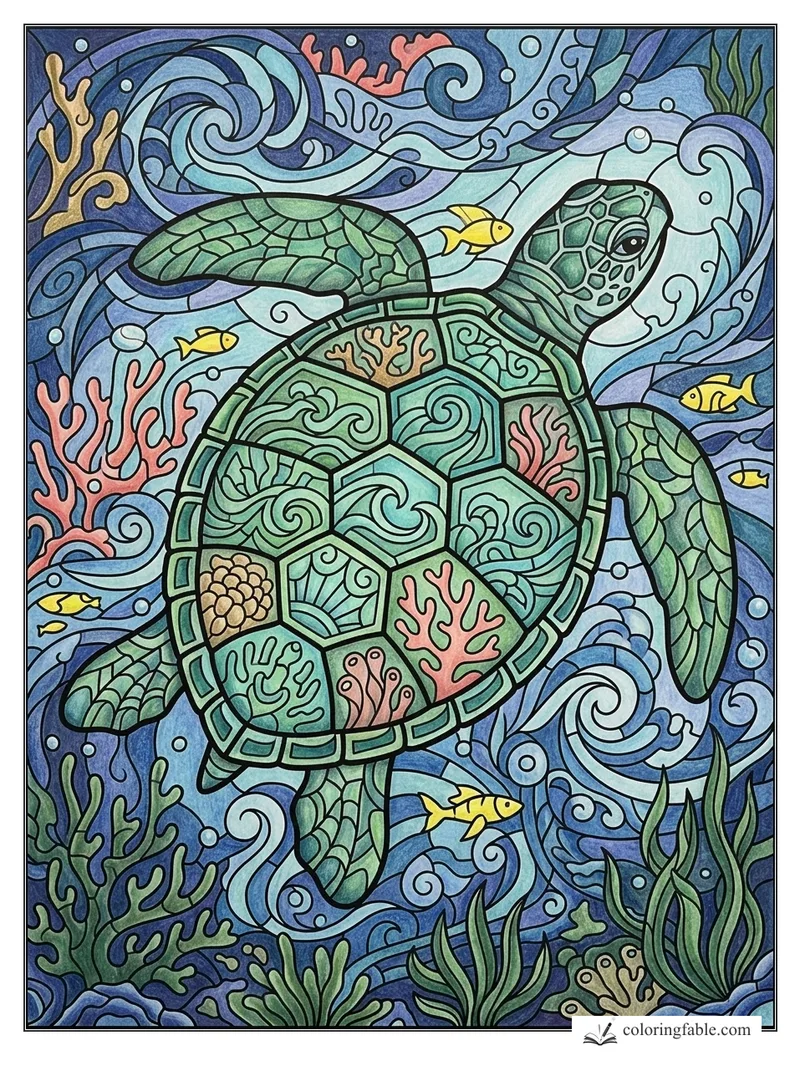
At moon-low, she tucked her head beneath the rim of her shell and heard a small tap, tap, tap, not outside but within. Under the oldest scute, where no cleaner shrimp had ever thought to look, lay a tide-seed, clear as a drop of glass. “There you are,” Veya whispered. When she pressed it close, the reef’s curls, branches, fish paths, and resting hollows lit across her shell, each one finding its pane.
So she did not choose a room; the reef chose to come with her. Ever since, sea turtles have carried broken-looking patterns on their backs, not as cracks, but as the first map of belonging, and every current still has a room of its own.