Crab coloring pages with claws, shells, tide pools, and ocean scenes
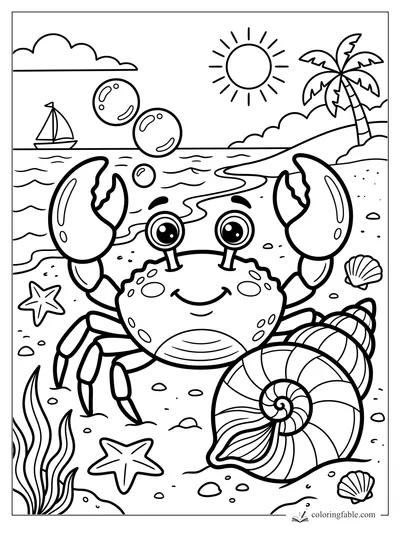
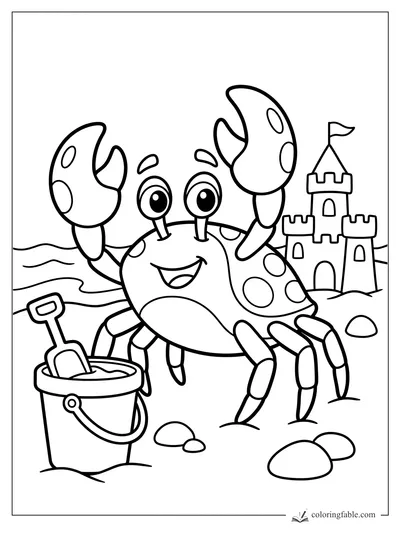
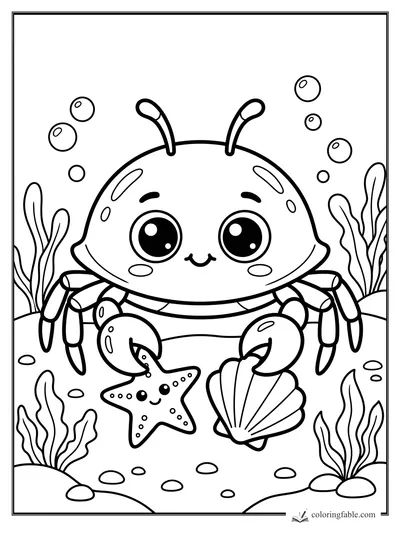
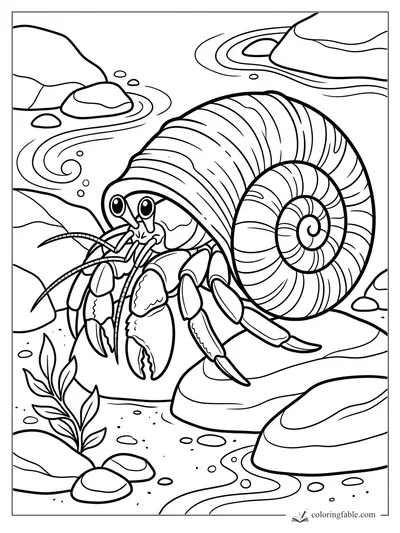
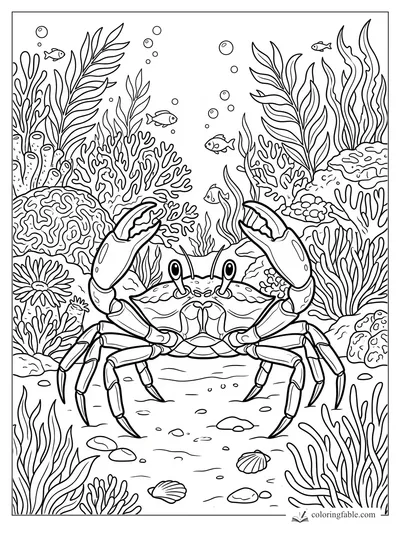
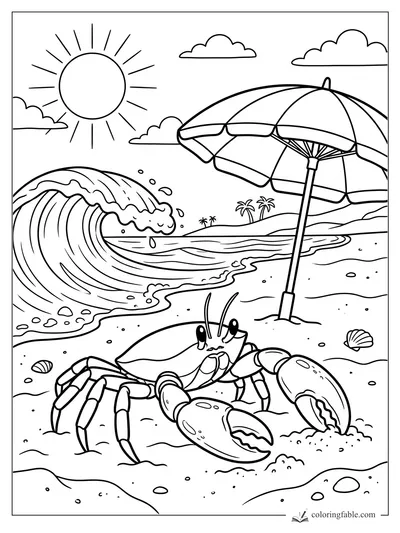
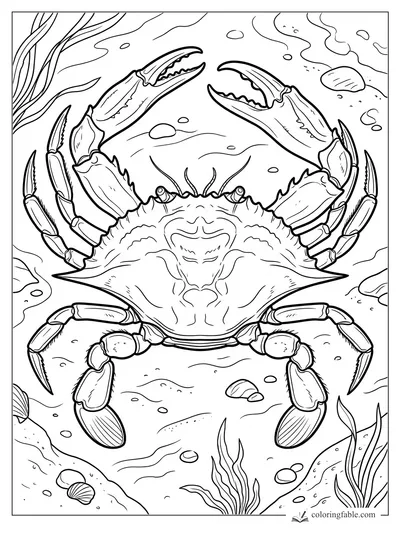
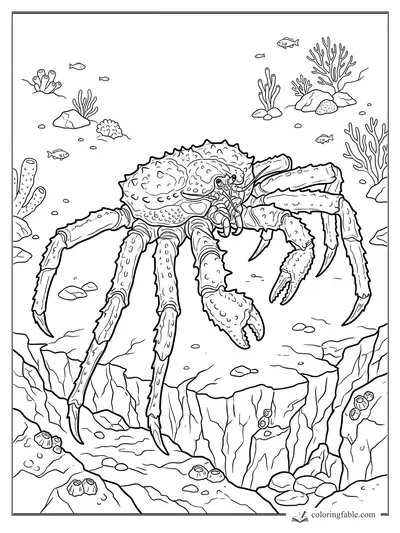
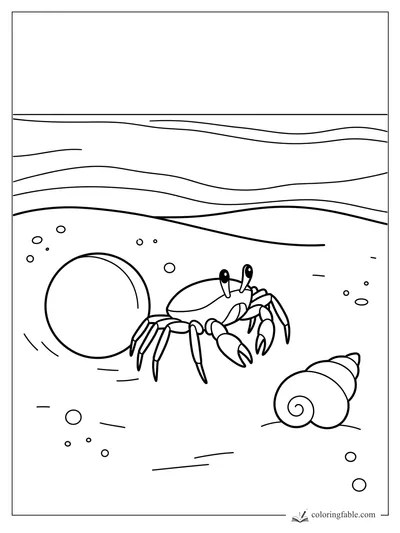
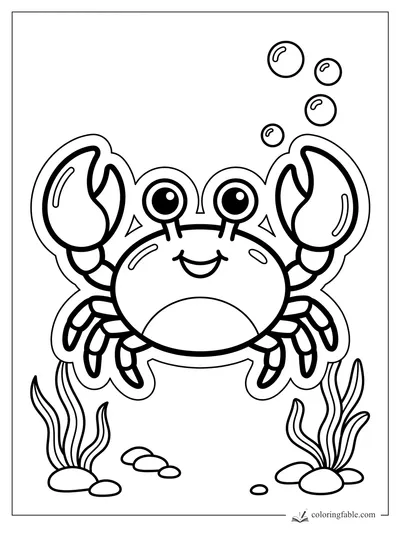
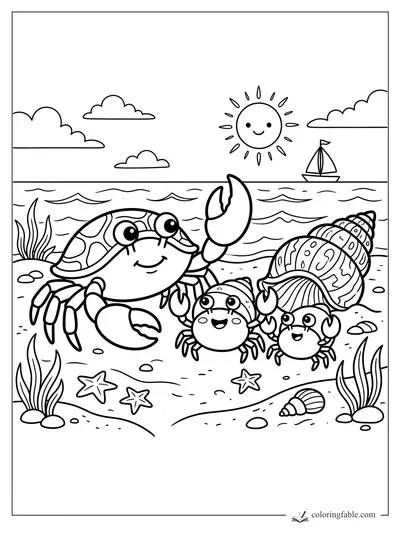
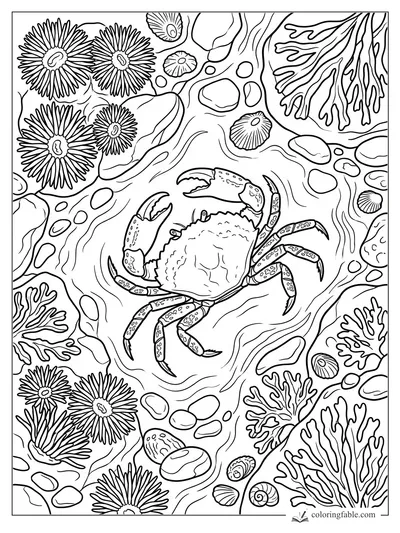
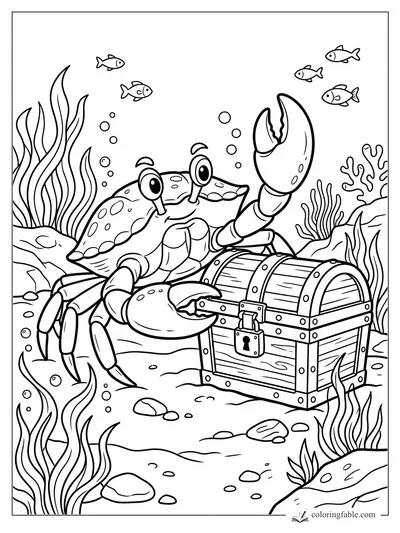
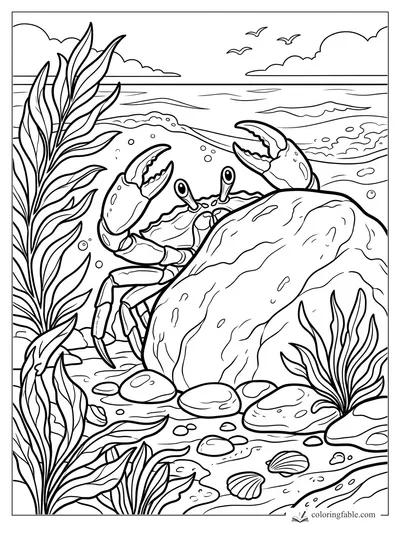
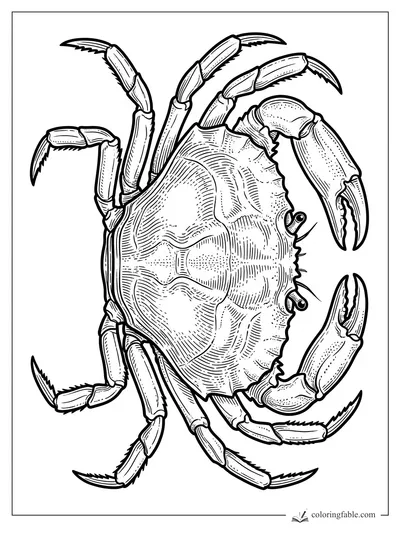
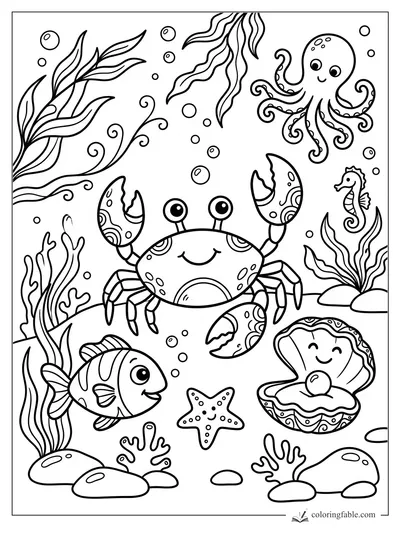
Inside this crab collection, you’ll find printable sheets featuring big-clawed cartoon crabs, side-walking beach crabs, hermit crabs peeking from spiral shells, and busier ocean scenes with seaweed, sand, bubbles, and tide-pool rocks. The easiest pages use bold outlines and wide shells for preschoolers practicing crayons. Older kids can try patterned carapaces, jointed legs, tiny eyes on stalks, and textured backgrounds that reward careful coloring. It’s a good fit for ocean units, beach-trip quiet time, classroom science tables, or anyone who wants a cheerful crustacean without drawing every bend in those legs from scratch.
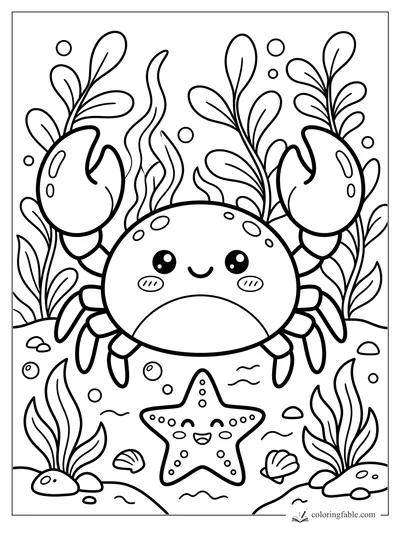
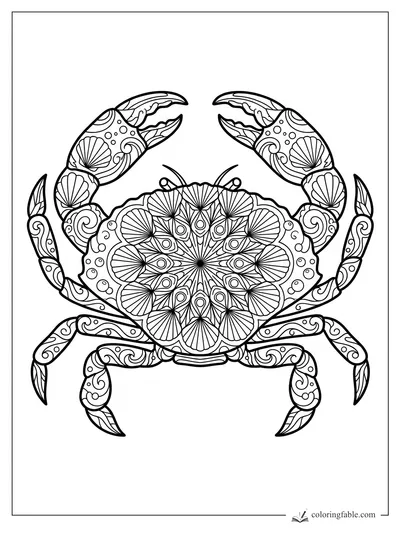
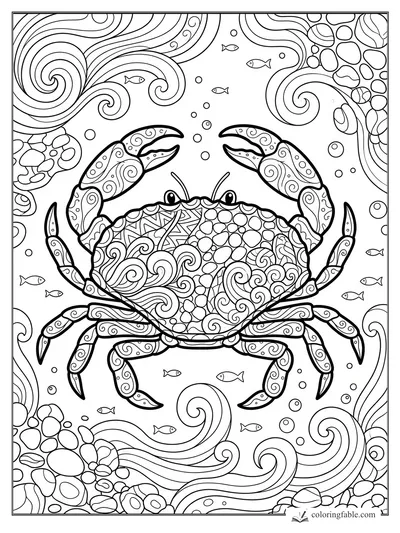
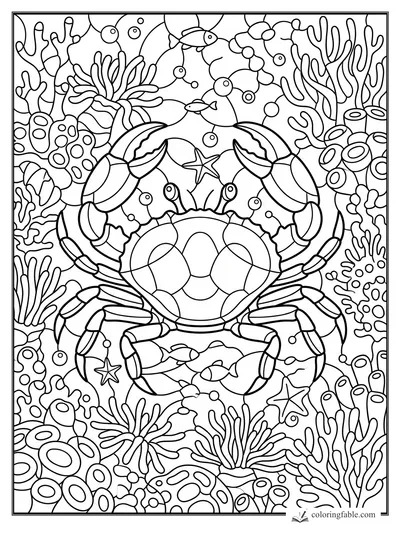
Crab pages by style, mood and season
Fun facts to share while coloring
Crabs are crustaceans, the same large group as lobsters and shrimp, and most true crabs have ten limbs: eight walking legs plus two claws. Their hard outer shell is an exoskeleton, so a growing crab has to molt, slipping out of the old shell and making a larger one. Many crabs move sideways because their leg joints bend best that way, though some species can walk forward or backward too. Crabs breathe with gills, which is why shore crabs hide under wet rocks or in damp sand when the tide is out. Hermit crabs are not true crabs; their soft abdomens are protected by empty snail shells they carry around.
Coloring tips
Start with a classic crab palette: shell red, orange, or rusty brown; claw tips a darker red; belly plates pale peach or cream; eye stalks black and white; sand tan; seaweed olive green; water turquoise or deep blue; bubbles left white with a blue rim. Crabs have rounded shells and lots of repeating leg segments, so color the carapace with a lighter center and darker edges, then shade each joint like a tiny tube. A few speckles on the shell and small shadows under the claws make the crab feel like it is sitting on wet sand. For a crab-specific twist, turn the shell into a tide-pool map with little barnacle dots, wave stripes, or a hidden starfish shape.